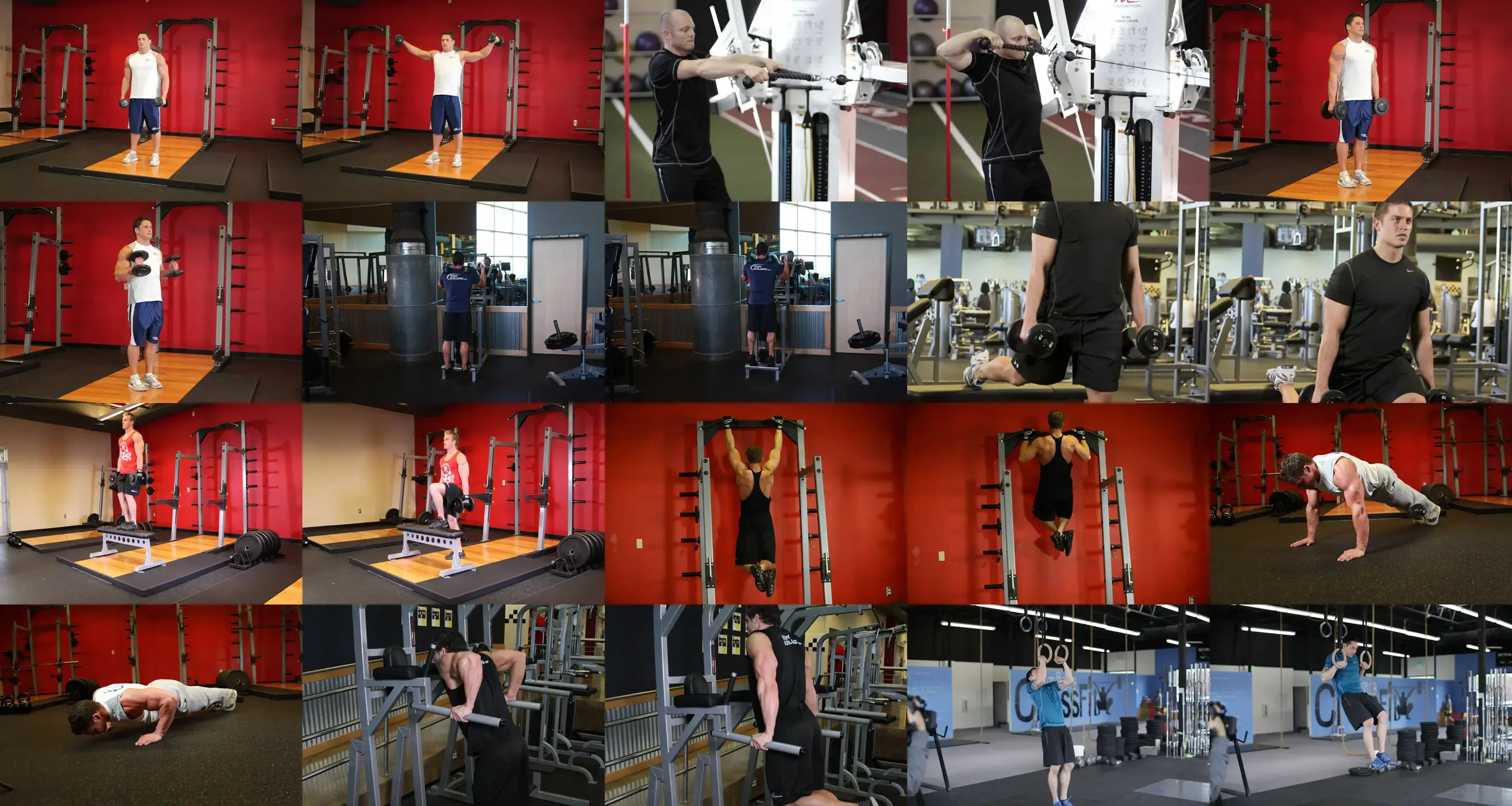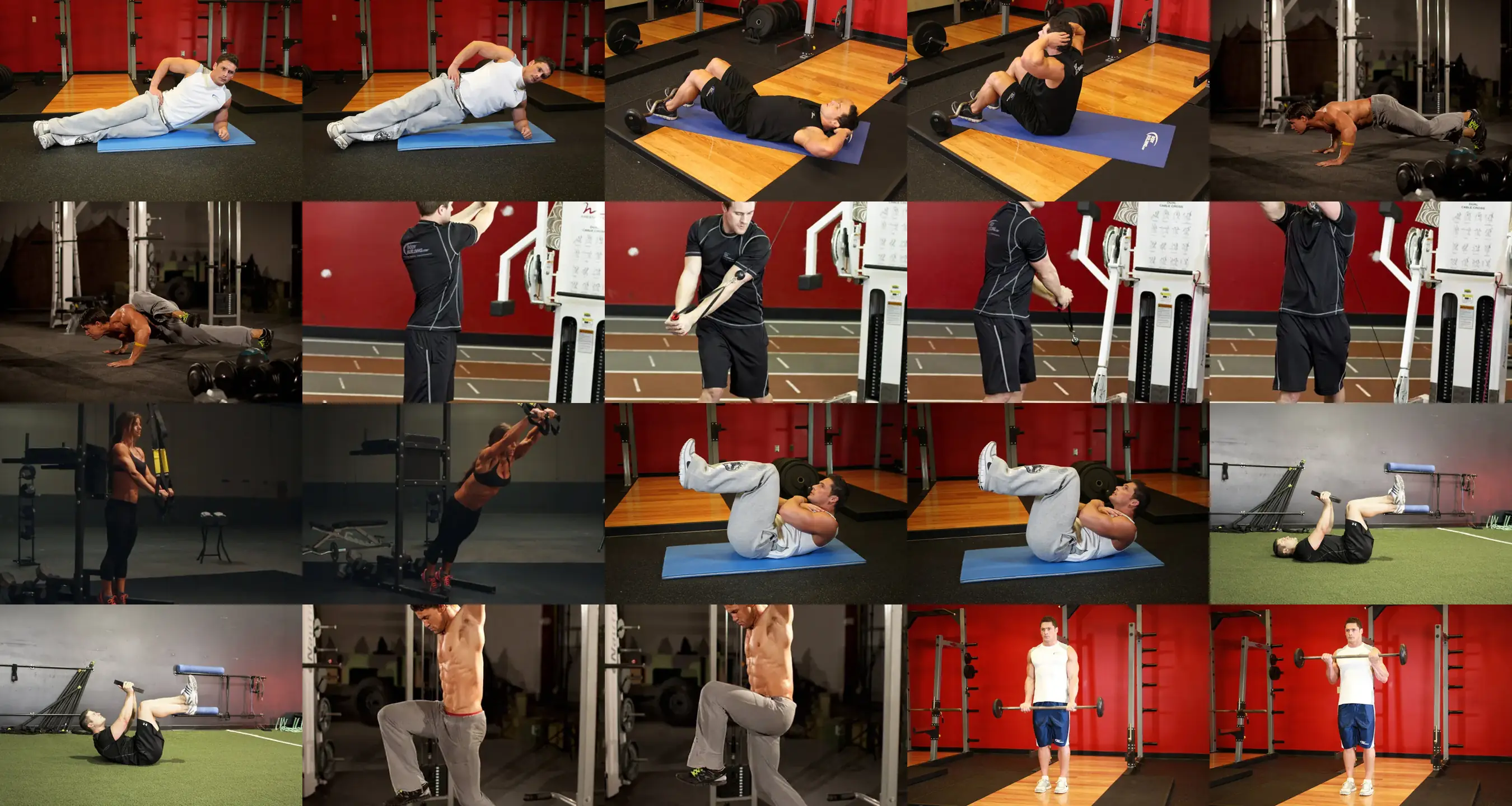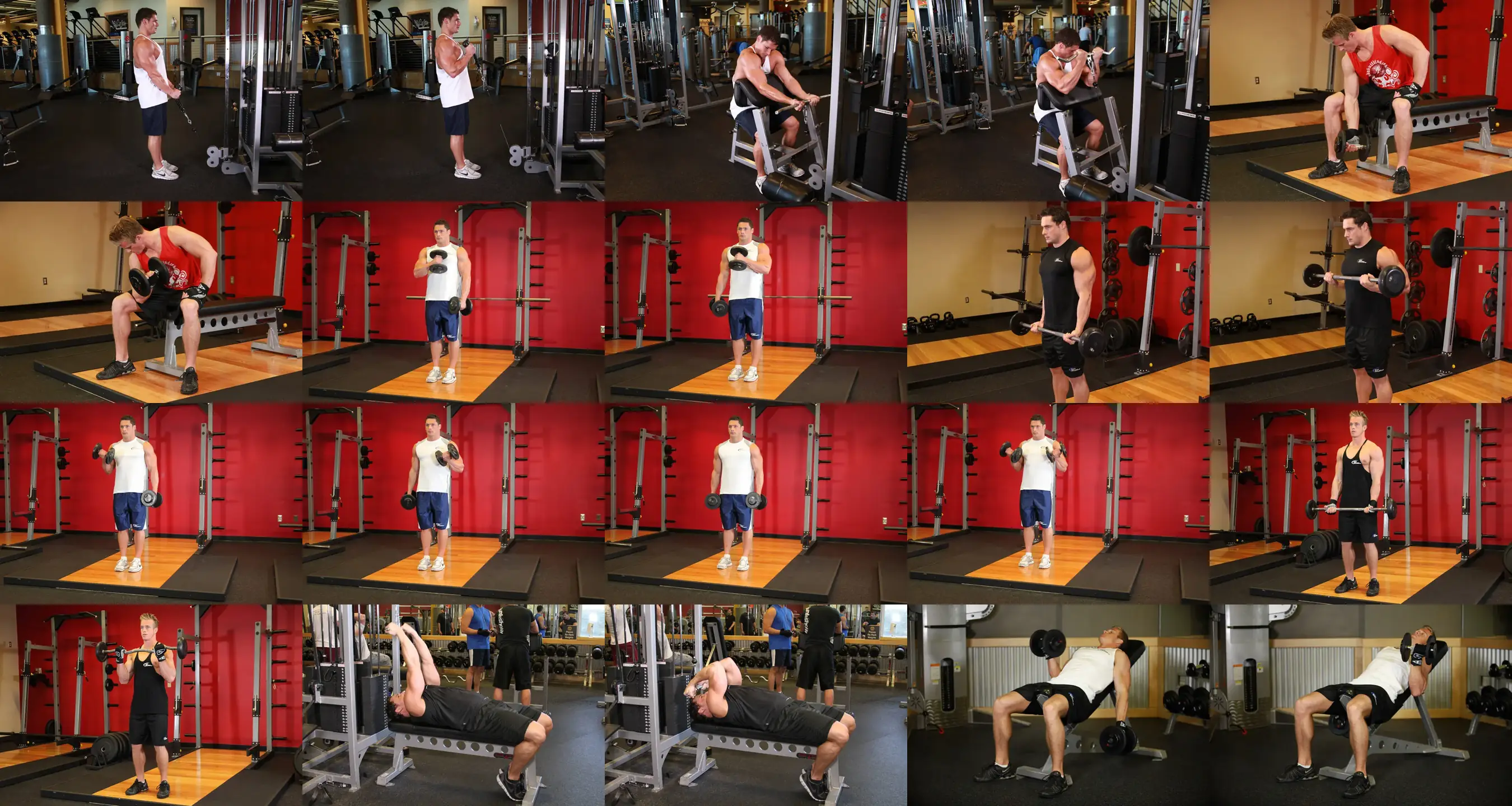
Setup and loading
Stand with feet hip width apart and a dumbbell in each hand, palms facing your thighs. Choose a weight that allows 8 to 12 reps per arm without swinging your torso or letting your shoulder roll forward.
How to do the alternating dumbbell curl step by step
- Stand holding a dumbbell in each hand, arms straight and palms facing your thighs.
- Tuck your elbows at your sides, brace your abs and breathe in.
- Exhale and curl your right arm, turning your palm up as the dumbbell rises.
- Squeeze your biceps for a second at the top, pinky slightly higher than your thumb.
- Breathe in and lower slowly, turning the palm back to neutral until your arm is straight.
- Repeat with your left arm and keep alternating, counting each arm as one rep.
Form cues
- Turn your palm as you lift
- Elbow fixed at your side
- One arm works, the other waits
- Torso upright, no swaying
Common mistakes
- Swaying side to side: momentum replaces your biceps; reduce the weight.
- Elbow drifting forward at the top: front delt takes over; keep it at your side.
- Rushing because you alternate: control slips; finish one arm before starting the other.
- Skipping supination: biceps do less work; rotate your palm up as you curl.
How to make it easier or harder
If you are new, do them seated on a bench with back support to cut down on swinging. To progress, add weight, hold one arm at 90 degrees isometrically while the other works or move to incline dumbbell curls.
Sets and reps for your goal
Hypertrophy
3 x 10-15 · rest 60 s3-4 sets of 6-12 reps (up to 15-20 on isolation exercises) at 65-80% of your max. Rest 1 to 2 minutes.
Get close to failure (0-3 reps in reserve) and control the lowering for 2-3 seconds. Accumulate 10-20 sets per muscle per week.
A guide for healthy adults. Adjust the load to your level and see a professional if you have an injury.
Check your form
Film yourself from the side or ask someone to watch, then tick what you get right.
Frequently asked questions
Should you alternate curls or do both arms together?
Both work. Alternating lets you focus on each arm and use a bit more weight because each biceps gets a brief rest. Curling both together keeps continuous tension and makes the set shorter.
Why rotate your wrist on alternating curls?
Because the biceps does more than bend the elbow; it also supinates the forearm. Starting with a neutral palm and turning it up as you lift trains the biceps in both of its jobs.
Sports it suits
Gear for this exercise
- Adjustable dumbbellsSave space and replace a whole dumbbell rack at home.
As an Amazon Associate, Muscle Atlas earns from qualifying purchases.