8 weeks · 2 sessions/wk
Strength for runners
A more efficient stride, tougher calves and tendons and fewer injuries, without cutting miles.
€19.99See program
Buy · €19.99Muscle
19 exercises that target the calves as the main muscle and 125 where they help as a secondary muscle. Open any of them to see the form, common mistakes and how many sets to do for your goal.
Your calves, made up of the gastrocnemius and soleus, work with every step you take. They are the main shock absorbers for running and jumping, and although they have a reputation for refusing to grow, they respond well to enough volume, full range of motion, and patience.
The gastrocnemius has two heads and crosses both the knee and ankle, while the deeper soleus crosses only the ankle. Both join at the Achilles tendon and point your foot down. During running, the soleus handles loads of several times your body weight on every stride. You use them walking, climbing stairs, or rising onto your toes. In running, basketball, volleyball, and tennis they are essential for pushing off and absorbing impact.
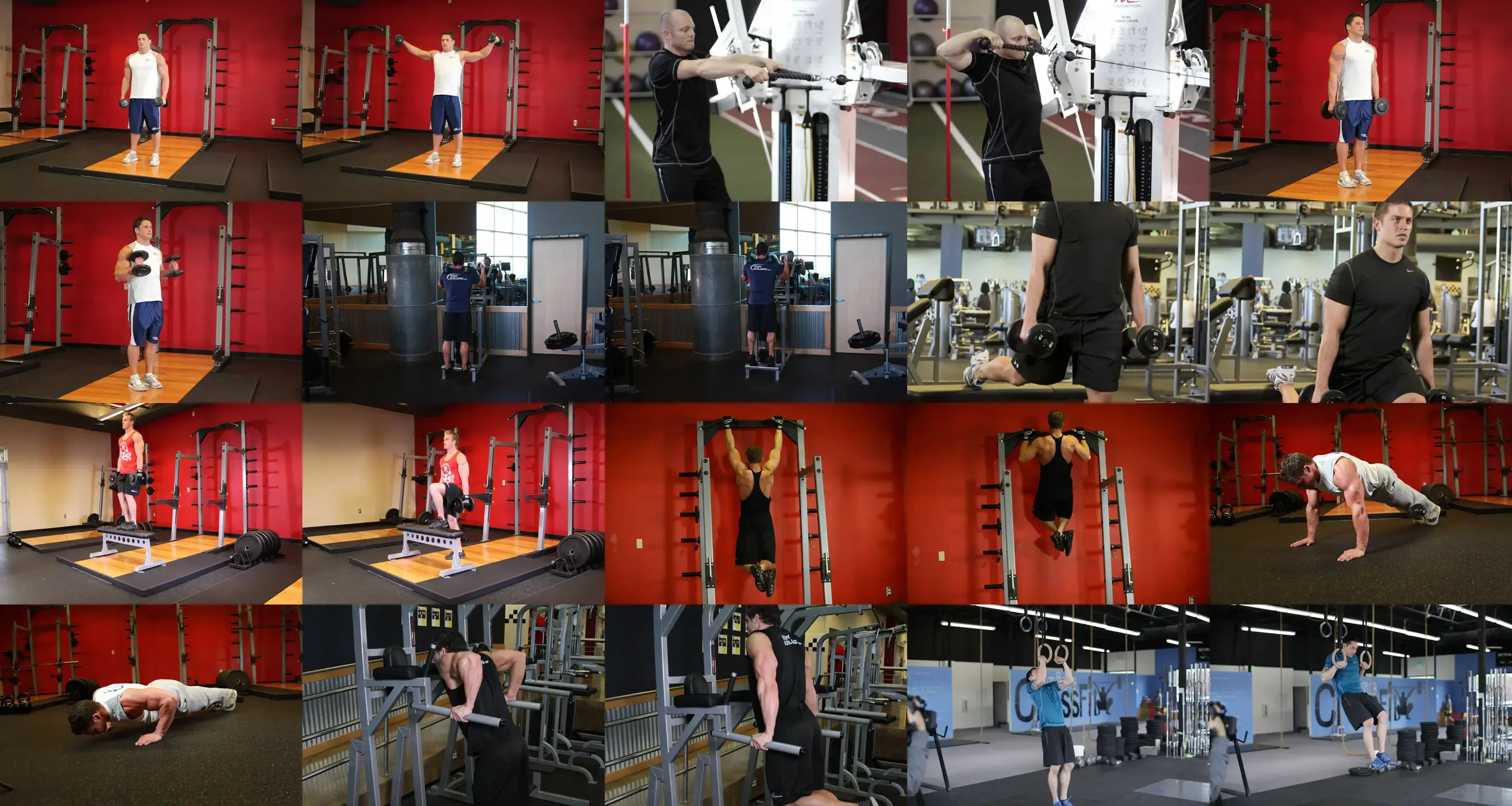
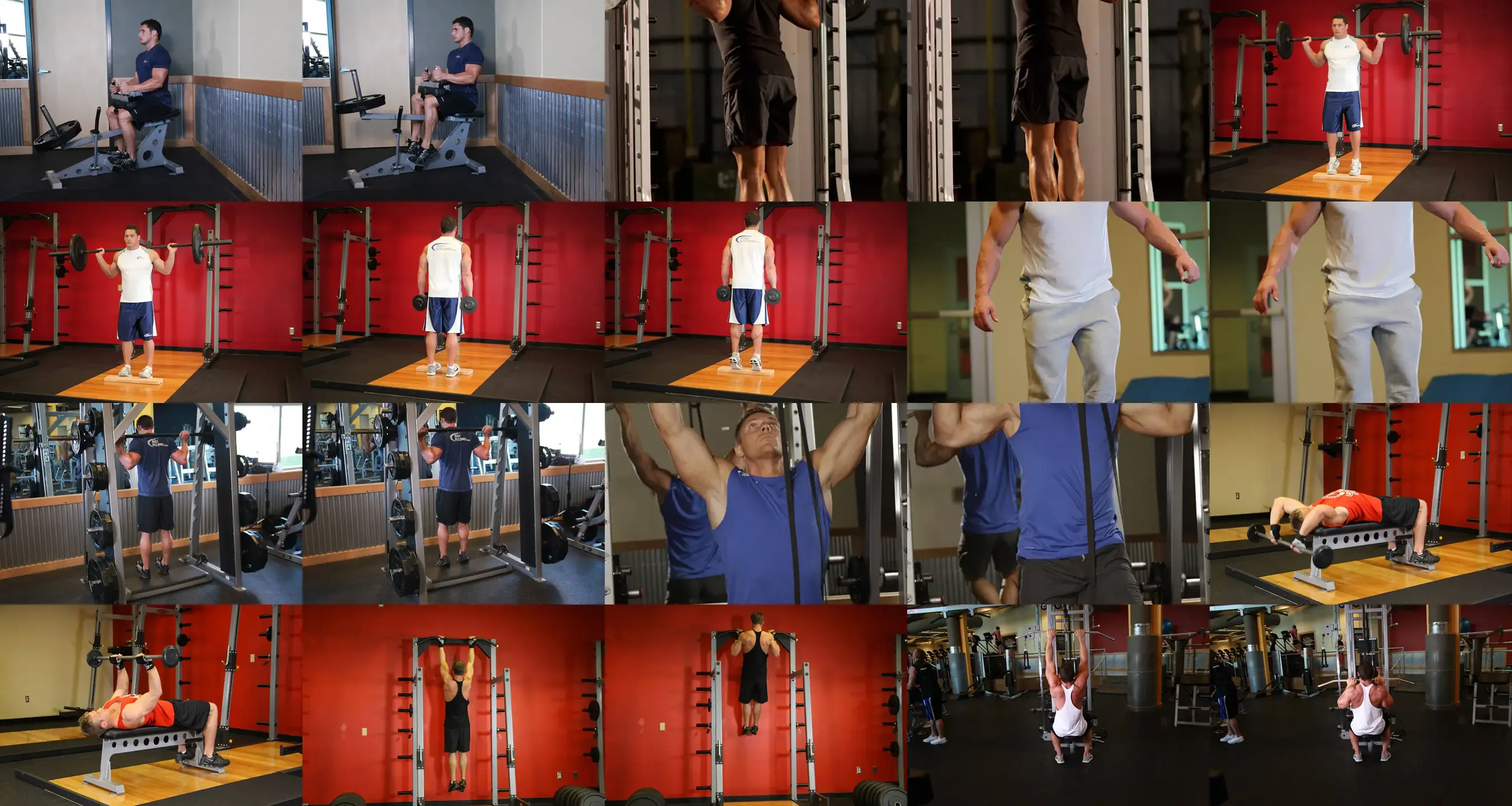
Do 8 to 16 weekly sets across two or three sessions. Standing calf raises with straight knees mainly hit the gastrocnemius, and seated raises with bent knees focus on the soleus, so include both. Use 8 to 20 reps with a one or two second pause at the bottom stretch. Single leg raises are especially useful for runners and for fixing side to side differences.
The most common mistake is bouncing through short reps with heavy weight, using the tendon like a spring instead of the muscle. Lower slowly into the stretch and rise all the way up. Another error is training only the gastrocnemius and neglecting the soleus, which matters a lot for runners. To look after your Achilles, raise running and jumping volume gradually and keep strength work going all season.
Genetics matter a lot, but the usual culprits are low volume, short range, or bouncing. Try 12 to 16 weekly sets with a pause in the stretch and steady load progression for several months before writing them off.
The gastrocnemius crosses the knee and works most with a straight leg; the soleus crosses only the ankle and takes over when the knee is bent. That is why you should do both standing and seated raises.
Strengthen your calves with heavy, slow heel raises, avoid sudden jumps in running or jumping volume, and transition gradually to flatter shoes. If you have persistent morning stiffness or pain in the tendon, see a professional.
6-8-week plans with sets, reps and progression, built for your sport. Includes a downloadable PDF.
A more efficient stride, tougher calves and tendons and fewer injuries, without cutting miles.
A higher vertical, a quicker first step and knees and ankles that handle stops and landings all season.
Repeated jumping without beat-up knees, a more powerful spike and a shoulder ready for thousands of swings.