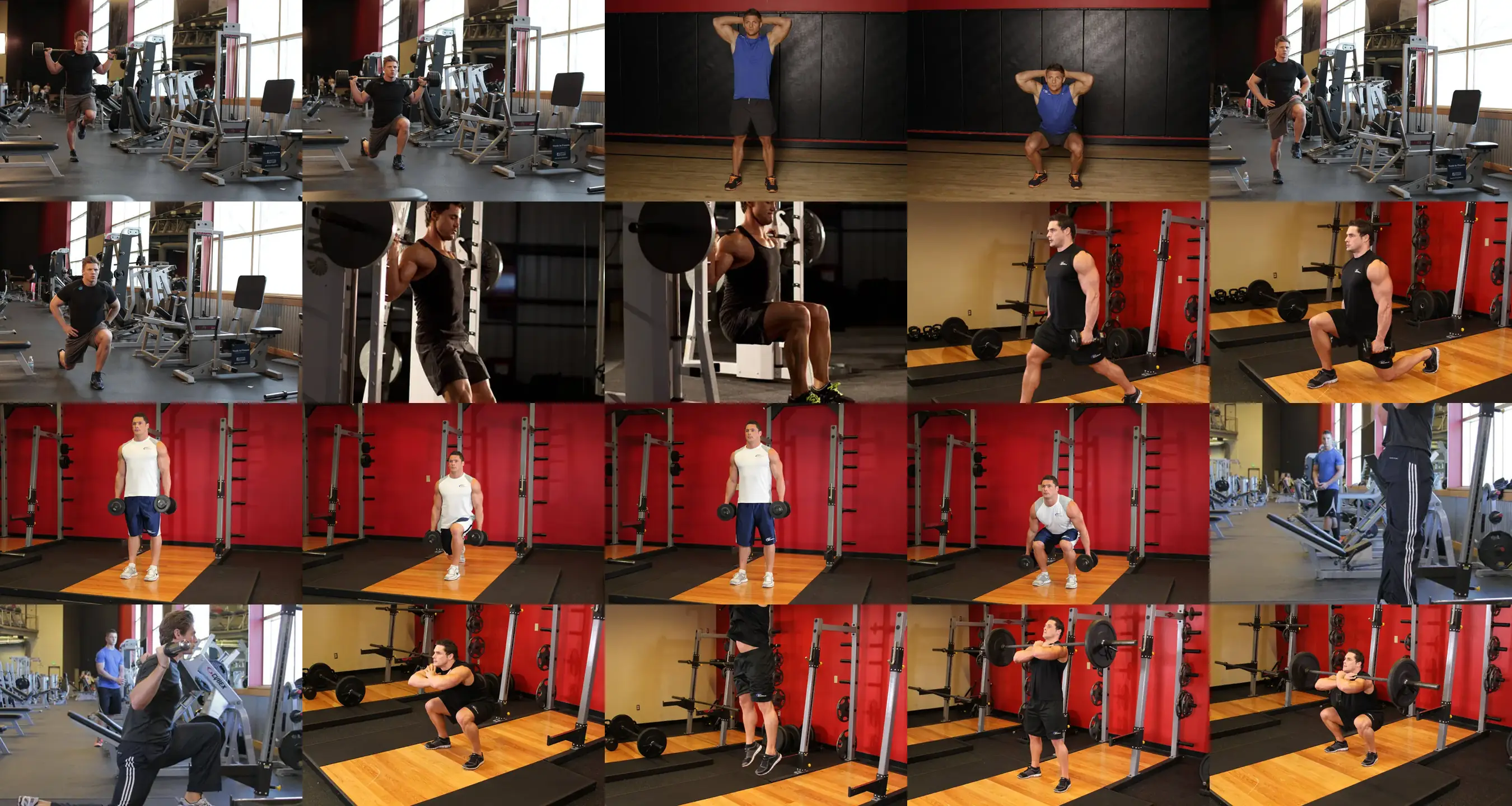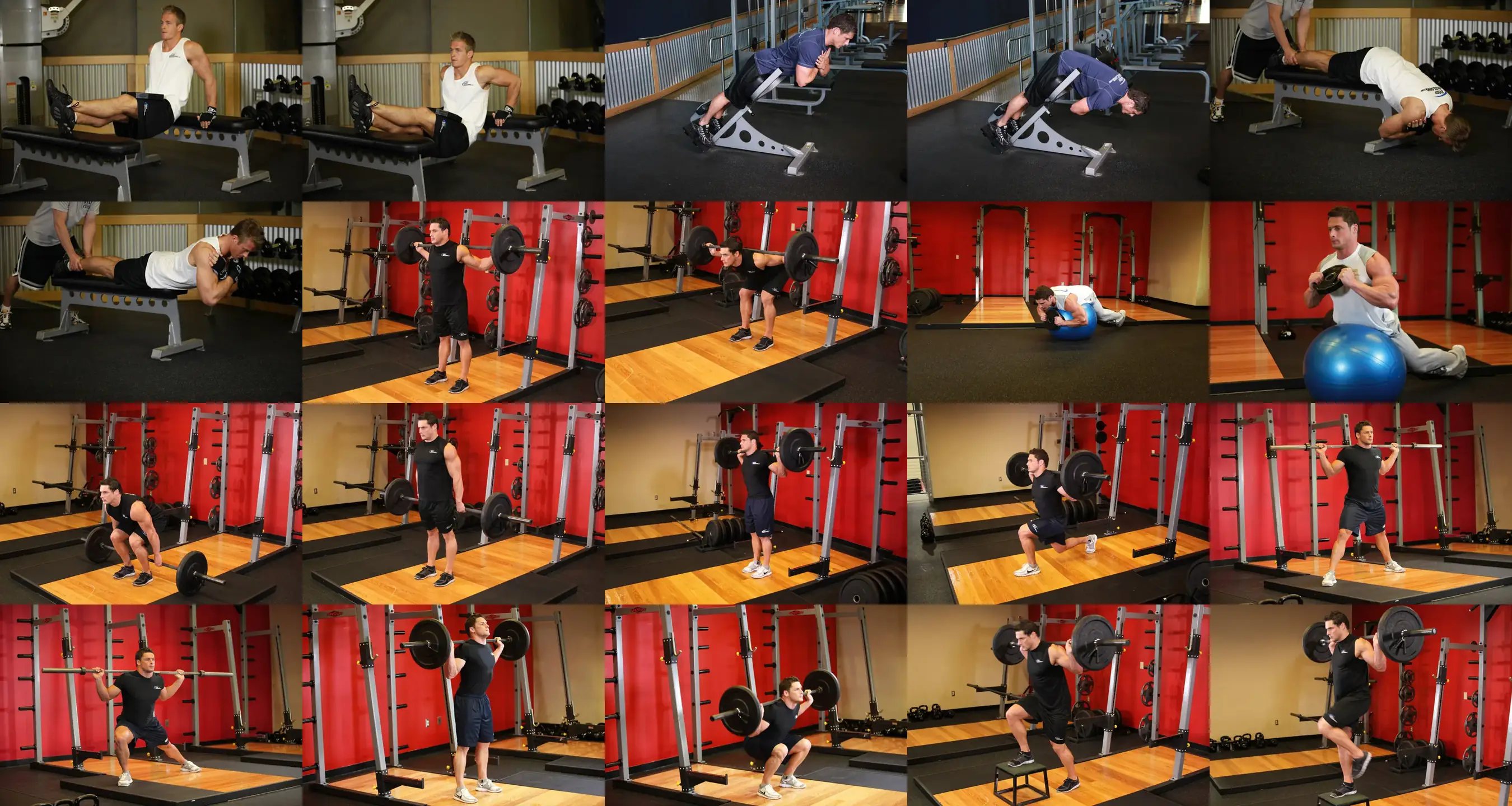
Setup and loading
Rest the bar low on your traps, unrack it, and make sure you have space in front of you. Start with the empty bar until your balance is solid, and add weight when you finish 8 to 10 reps per leg without wobbling.
How to do the barbell lunge step by step
- Unrack the bar on your traps and stand with your feet hip width apart.
- Inhale, brace your core, and take a long step forward with one leg while keeping your torso tall.
- Lower by bending both knees until your back knee is an inch or two from the floor.
- Keep your front knee tracking over your foot and your weight spread across the whole front foot.
- Exhale and push through your front heel to return to the starting position.
- Alternate legs or complete all reps on one side before switching.
Form cues
- Torso tall under the bar
- Front knee tracks over your toes
- Long, stable step with feet on two tracks
- Drive through your heel to come back
Common mistakes
- Stepping too short: your knee travels far forward and stresses the joint; lengthen your stride.
- Feet on one line: you lose balance; keep hip width between them.
- Leaning your torso forward: the bar pulls you over; keep your chest up.
- Knee caving in: it stresses the knee; push it out in line with your foot.
How to make it easier or harder
To make it easier, do bodyweight lunges or hold dumbbells at your sides. To progress, add load, do barbell walking lunges, or try deficit reverse lunges for more range.
Sets and reps for your goal
Hypertrophy
3-4 x 8-12 · rest 60-90 s3-4 sets of 6-12 reps (up to 15-20 on isolation exercises) at 65-80% of your max. Rest 1 to 2 minutes.
Get close to failure (0-3 reps in reserve) and control the lowering for 2-3 seconds. Accumulate 10-20 sets per muscle per week.
Max Strength
4-5 x 3-6 · rest 2-3 min3-6 sets of 1-6 reps at 80-90% of your max (1RM). Rest 2 to 5 minutes.
Leave 1-3 reps in reserve. If your technique breaks down, lower the weight: strength is built with good reps.
A guide for healthy adults. Adjust the load to your level and see a professional if you have an injury.
Check your form
Film yourself from the side or ask someone to watch, then tick what you get right.
Frequently asked questions
Should I lunge with a barbell or dumbbells?
Dumbbells keep your center of gravity lower and make balance easier. A barbell lets you load heavier and challenges your core more, but it demands better technique. Learning with dumbbells and then moving to the bar makes sense.
How long should my lunge step be?
Long enough that both knees reach about 90 degrees at the bottom. A short step pushes the knee far forward, while a very long one shifts more work to your glutes and hips. Experiment until you find a stable position.
Sports it suits
Gear for this exercise
- Olympic barbell and platesTo keep progressing on the big lifts with heavy loads.
As an Amazon Associate, Muscle Atlas earns from qualifying purchases.