Setup and loading
Pick a stable box, ideally a soft foam one, at a height that lets you land softly with your knees half bent, not in a deep squat. Do 3 to 5 sets of 3 to 5 jumps with full rest; only raise the box when every landing is quiet and controlled.
How to do the box jump step by step
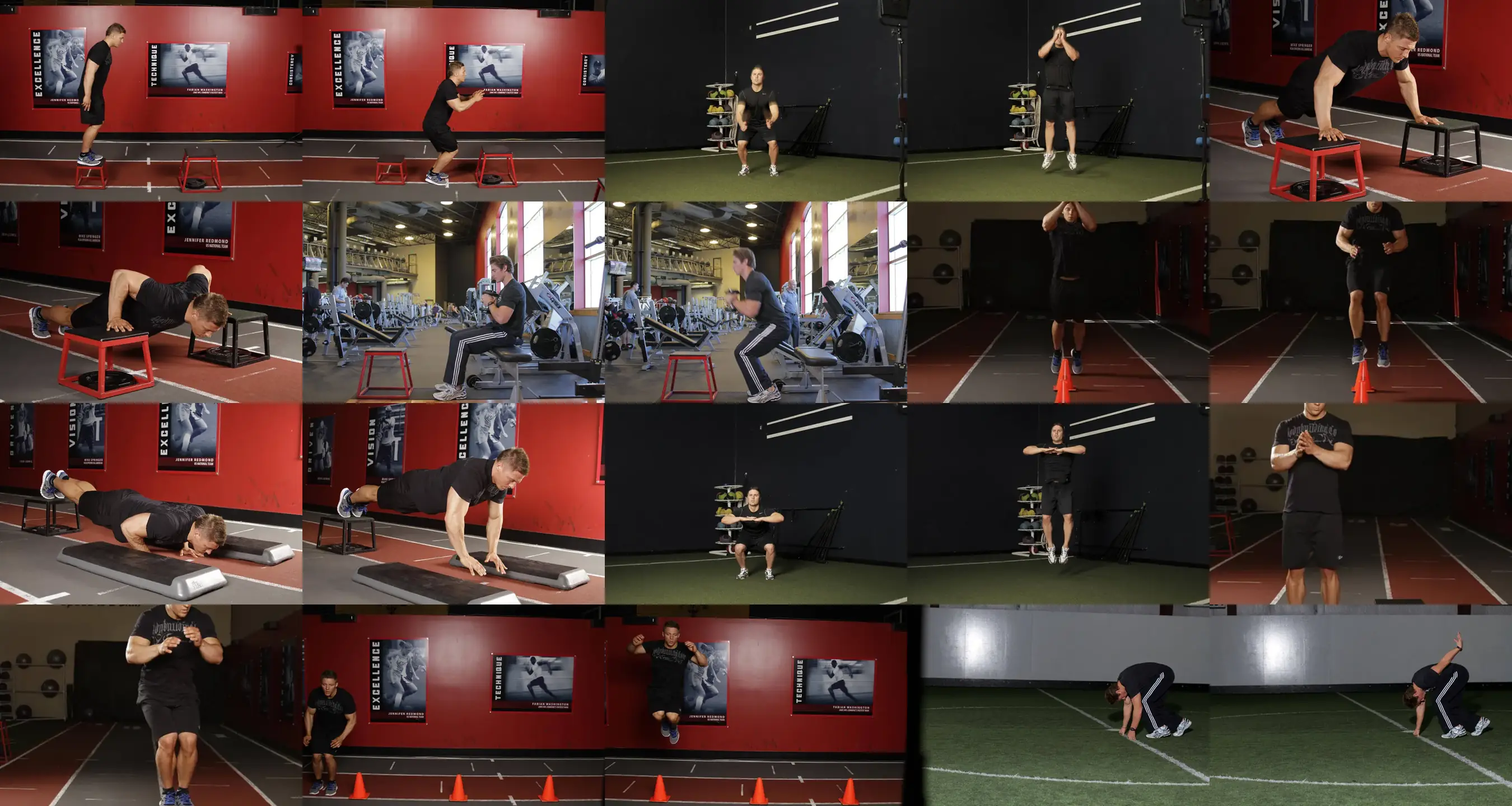
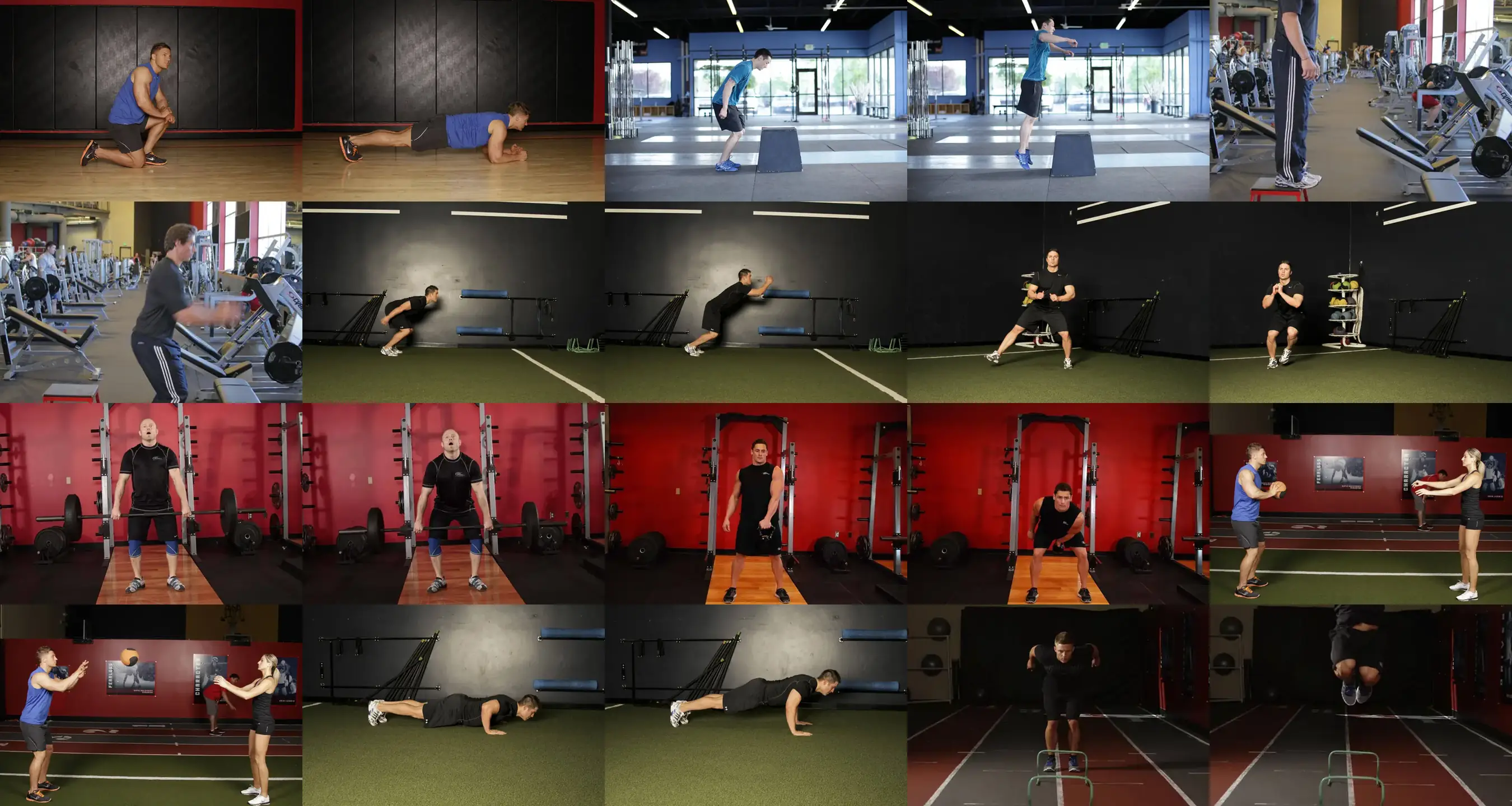
- Stand facing the box about a foot away with your feet hip-width apart.
- Dip quickly by bending your hips and knees while swinging your arms back, loading like a spring.
- Without pausing, jump explosively by extending your hips, knees and ankles and driving your arms up.
- Tuck your knees in the air and land with both full feet on the box at the same time.
- Land softly with your knees bent and lined up over your feet, then stand all the way up on the box.
- Step down one foot at a time, never jump backward off the box, and breathe before the next rep.
Form cues
- Arms back, then drive them up hard
- Quiet landing with bent knees
- Knees out as you land
- Every jump is a max effort
Common mistakes
- Raising the box until you land in a deep squat: it tests mobility, not power; lower it and jump higher.
- Jumping back down: it multiplies stress on your tendons; always step down.
- Knees caving in on landing: it stresses the joint; push them out in line with your feet.
- Jumping while fatigued: you are more likely to trip; rest one to two minutes and stop if takeoff slows.
How to make it easier or harder
To start, practice vertical jumps on the floor with a controlled landing or use a very low 12-inch box. To progress, try seated box jumps from a bench, non-countermovement box jumps from a static start, or single-leg jumps onto a low box.
Sets and reps for your goal
Plyometrics
4 x 3-5 · rest 90 s3-6 sets of 3-8 jumps. In total, 60-100 contacts per session (40-60 if you're a beginner). Rest 1 to 2 minutes between sets.
Short, quiet ground contact. If the jump loses height or your foot sticks to the ground, stop: the set is no longer training reactivity. Two sessions per week, 48 h apart.
Power
5 x 3 · full rest3-6 sets of 1-5 reps with light or moderate loads (30-60% of your max on the main lifts), or with a ball or your bodyweight. Rest 2 to 3 minutes.
Every rep at the highest possible speed. As soon as you notice it moving slower (a 10-20% velocity loss), end the set. Train power fresh, never fatigued.
A guide for healthy adults. Adjust the load to your level and see a professional if you have an injury.
Check your form
Film yourself from the side or ask someone to watch, then tick what you get right.
Frequently asked questions
What box height should I use?
Use a height where you land quietly with your knees half bent. For most beginners that is 12 to 20 inches. A taller box only helps if your actual jump height keeps improving.
Are box jumps good for beginners?
Yes, as long as you start with a low box, ideally a soft one, and step down after each rep. They reduce impact compared with other jumps and teach good landing mechanics. Do them early in your session, fresh, with low reps.
Sports it suits
Gear for this exercise
- Plyo boxFoam boxes forgive missed jumps.
As an Amazon Associate, Muscle Atlas earns from qualifying purchases.