Setup and loading
Rest the dumbbells on your thighs, pop them to your shoulders with a small knee kick, and stand tall with feet hip width apart. Choose a weight you can press for 6 to 12 reps without pushing your hips forward or arching your back.
How to do the dumbbell shoulder press step by step
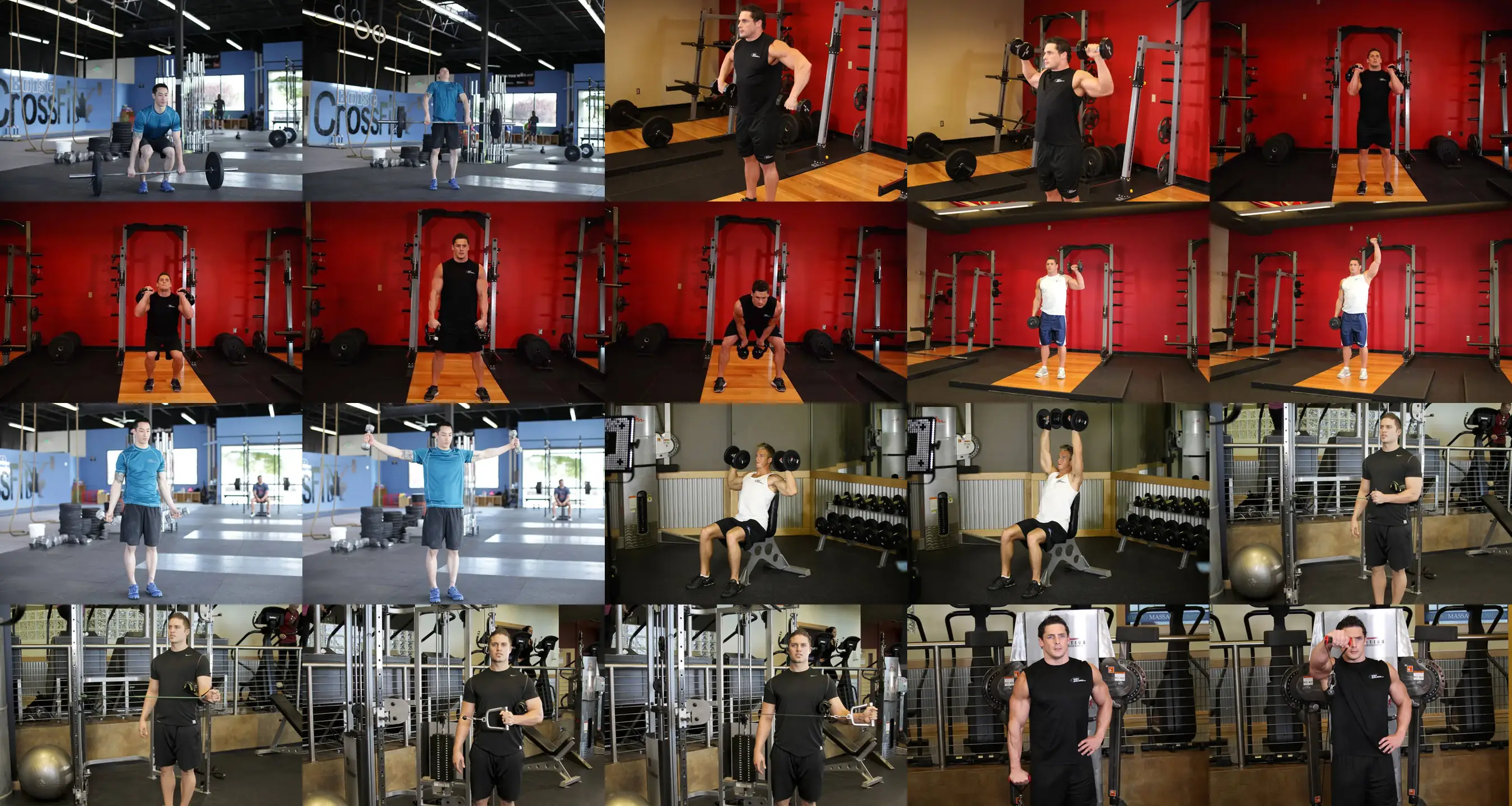
- With the dumbbells on your thighs, kick them up to your shoulders using your knees and stand tall.
- Hold the dumbbells beside your shoulders, palms forward, elbows slightly in front and under your wrists.
- Take a breath, squeeze glutes and abs, and exhale as you press the dumbbells up and slightly inward.
- Finish with arms straight overhead, dumbbells not clanking, and your head between your arms.
- Inhale and lower under control until the dumbbells reach chin or shoulder height.
- When done, lower the dumbbells to your thighs one at a time or with bent knees.
Form cues
- Ribs down, glutes tight
- Forearms vertical under the weights
- Press up and slightly in
- Head through your arms at the top
Common mistakes
- Arching your lower back: it loads the spine; squeeze glutes and pull your ribs down.
- Using leg drive: it is no longer a strict press; keep your knees locked.
- Flaring elbows straight out to the sides: it stresses the shoulder; bring them about 30 degrees forward.
- Lowering only partway: you cut the range; bring them to chin height every rep.
How to make it easier or harder
As a regression, do the seated version with a backrest for stability, or reduce the weight. To progress, add load, try alternating presses while holding one dumbbell locked out, or move to the standing barbell overhead press.
Sets and reps for your goal
Hypertrophy
3-4 x 8-12 · rest 60-90 s3-4 sets of 6-12 reps (up to 15-20 on isolation exercises) at 65-80% of your max. Rest 1 to 2 minutes.
Get close to failure (0-3 reps in reserve) and control the lowering for 2-3 seconds. Accumulate 10-20 sets per muscle per week.
Max Strength
4-5 x 3-6 · rest 2-3 min3-6 sets of 1-6 reps at 80-90% of your max (1RM). Rest 2 to 5 minutes.
Leave 1-3 reps in reserve. If your technique breaks down, lower the weight: strength is built with good reps.
A guide for healthy adults. Adjust the load to your level and see a professional if you have an injury.
Check your form
Film yourself from the side or ask someone to watch, then tick what you get right.
Frequently asked questions
Is the shoulder press better standing or seated?
Standing trains your core more and is more functional, but you usually press a bit less weight. Seated with back support is more stable and lets you focus on the shoulders. Both are valid and can be rotated across training blocks.
How do I get heavy dumbbells to my shoulders?
Rest them on your thighs and use a small knee kick to bring them up, one at a time if they are very heavy. That way you avoid yanking with your back or straining your shoulders before the set begins.
Sports it suits
Gear for this exercise
- Adjustable dumbbellsSave space and replace a whole dumbbell rack at home.
As an Amazon Associate, Muscle Atlas earns from qualifying purchases.