Setup and loading
It is done with bodyweight only, on a surface that does not slip. Adjust the difficulty by how straight you keep your legs and how far you walk your hands; going past your shoulders challenges your core more.
How to do the inchworm step by step
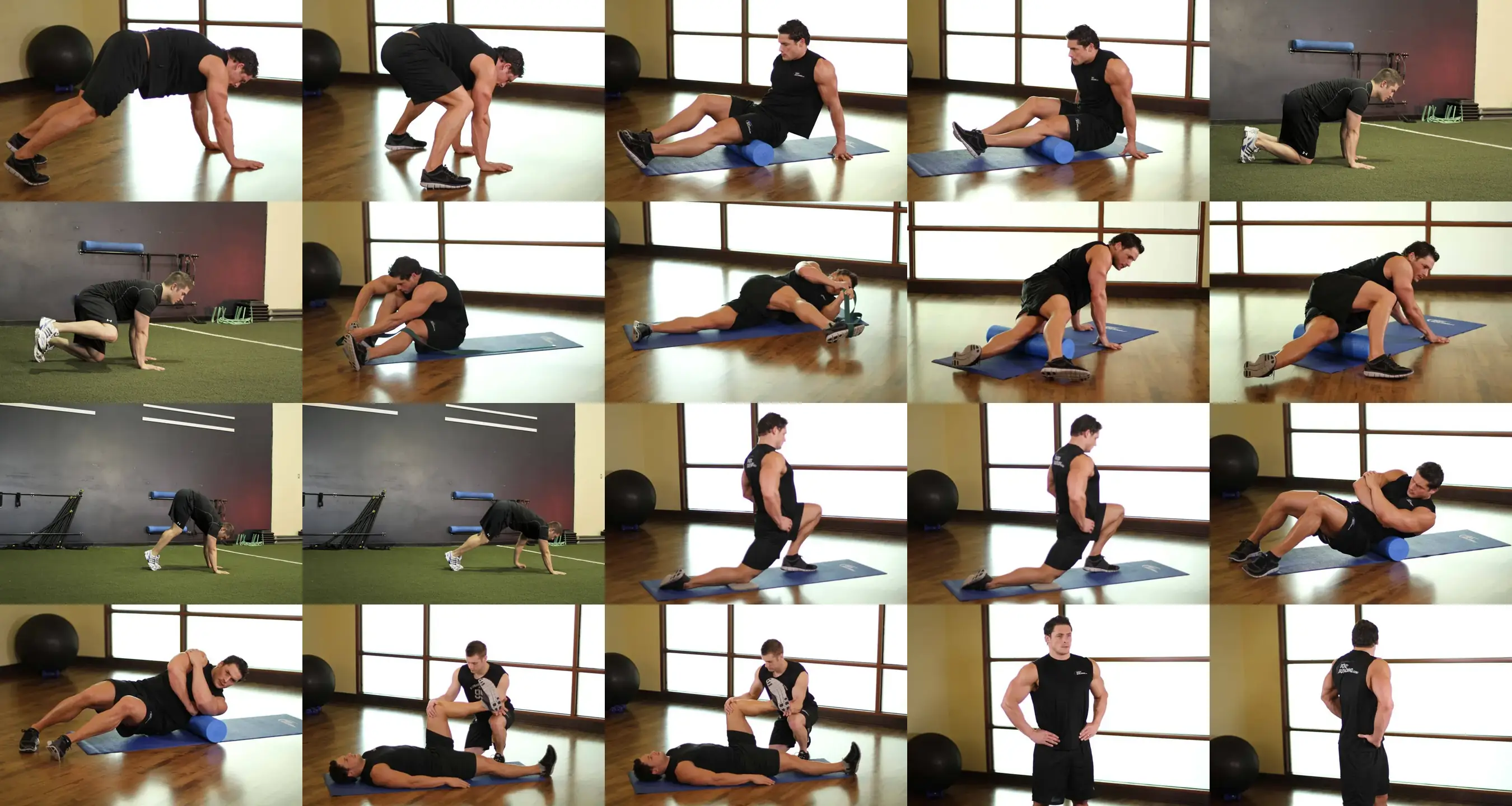
- Stand with feet hip-width apart and legs straight or with a very slight bend in the knees.
- Exhale and hinge at the hips to bring your hands to the floor as close to your feet as possible.
- Walk your hands forward one at a time until you reach a high plank with hands under your shoulders.
- Hold the plank for a second with your body in a straight line, glutes squeezed and abs tight.
- Take small steps with your feet toward your hands, keeping your legs as straight as you can.
- When the hamstring stretch gets intense, roll up through your spine to stand and repeat.
Form cues
- Keep legs long and bend knees only if needed
- In the plank, hips line up with shoulders and heels
- Small steps with both hands and feet
- Breathe steadily instead of holding your breath
Common mistakes
- Sagging hips in the plank: it loads your lower back; squeeze glutes and abs to hold a straight line.
- Bending the knees too much: you lose the stretch; straighten them gradually even if you reach less.
- Moving too fast: you lose control and the stretch; count each step and pause in the plank.
- Hands ahead of shoulders in the plank: it strains the shoulder; finish with wrists stacked under shoulders.
How to make it easier or harder
To make it easier, bend your knees on the way down and stop at a high plank. To make it harder, add a push-up at the plank, walk your hands past your shoulders, or finish with a spiderman lunge stretch.
Sets and reps for your goal
Mobility
2-3 x 20-40 s per side2-3 sets of 30-60 seconds or 8-10 slow reps. Daily or before training.
Work in a pain-free range with slow breathing. A little often is better than a lot once in a while.
A guide for healthy adults. Adjust the load to your level and see a professional if you have an injury.
Check your form
Film yourself from the side or ask someone to watch, then tick what you get right.
Frequently asked questions
How many inchworms should I do?
For a warm-up, 5 to 8 slow reps in one or two sets is plenty. If you use it in a bodyweight circuit, work in 30 to 40 second sets while keeping each step clean and controlled.
What if I can't reach the floor with straight legs?
Bend your knees just enough to place your hands down, then work on straightening them over the weeks. The goal is to feel tension in your hamstrings, not to touch the floor at any cost. Forcing it with a rounded back won't improve flexibility.
Sports it suits
Gear for this exercise
- Exercise matThick (8-10 mm) for floor work.
As an Amazon Associate, Muscle Atlas earns from qualifying purchases.