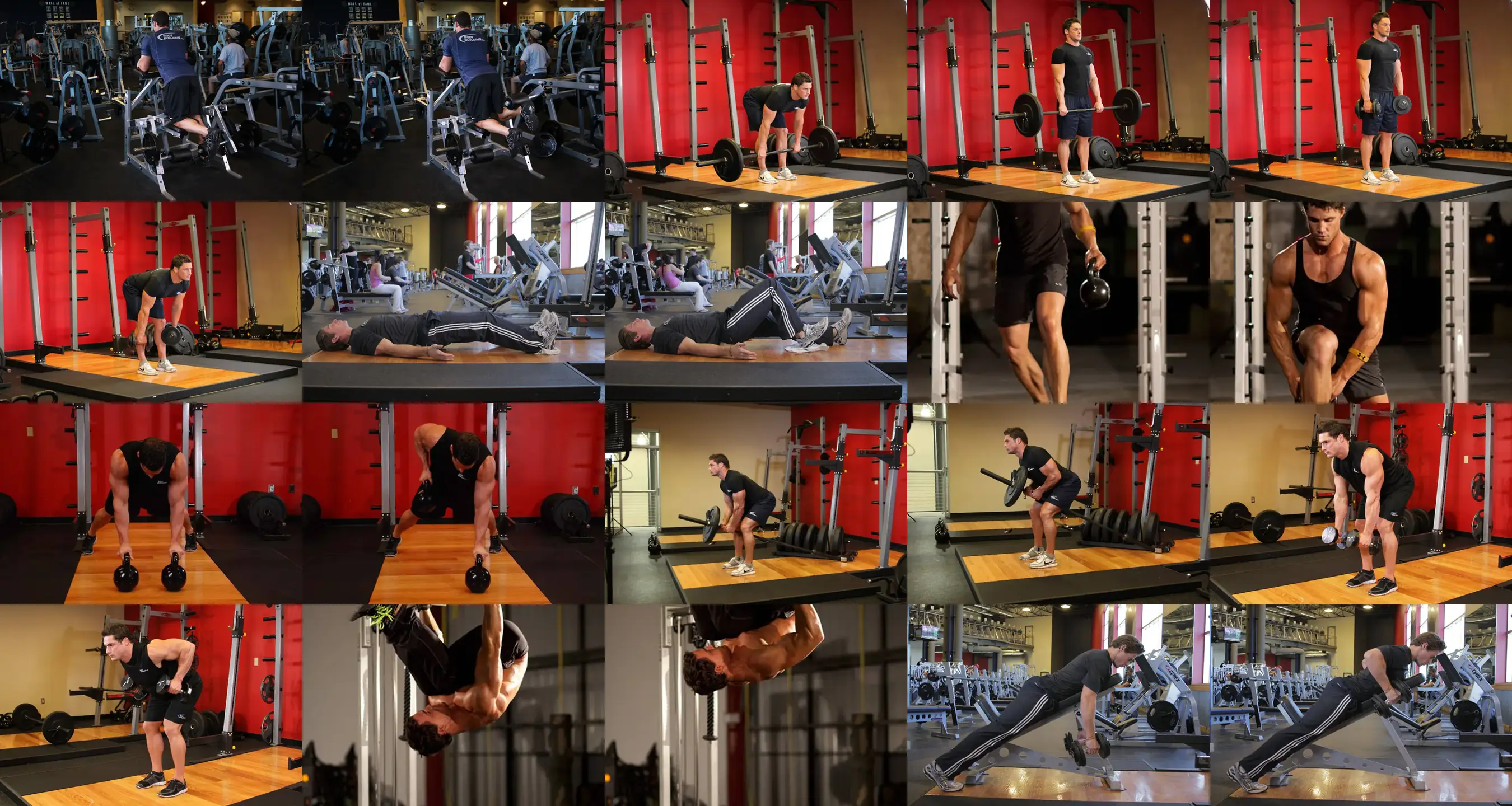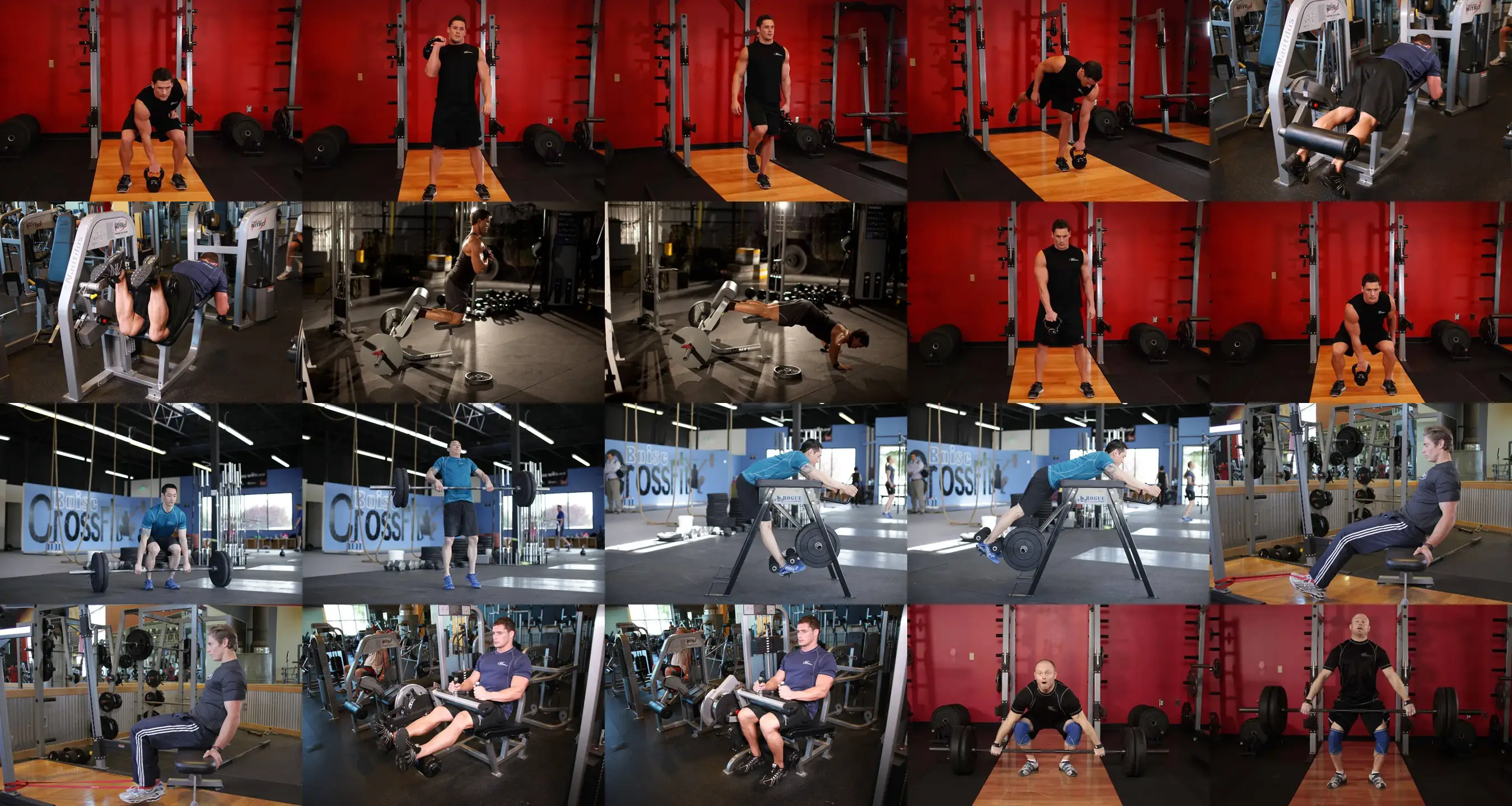
Setup and loading
On a machine, place the strap just above your ankles and start with no load or a light plate; on a high bench, use the weight of your legs. Aim for 10 to 15 controlled reps without using the pendulum's momentum to swing up.
How to do the reverse hyperextension step by step
- Lie face down with your torso on the platform and your hips right at the edge, legs hanging toward the floor.
- Grip the handles or the sides of the bench firmly and keep your chest down.
- If you use a machine, set the strap above your ankles; on a bench, keep your legs together and straight.
- Breathe out and raise your legs with your glutes squeezed until they line up with your torso.
- Hold briefly at the top without arching your low back or going past horizontal.
- Breathe in and lower your legs slowly, controlling the pendulum so the load does not pull you down.
Form cues
- Lift with your glutes, not your back
- Legs in line with your torso, no higher
- No swinging on the way up or down
- Chest and hips stay planted on the pad
Common mistakes
- Overarching your low back: compresses your spine; stop when your legs line up with your torso.
- Using pendulum momentum: steals work from your glutes; lower under control and pause at the bottom.
- Hips too far forward on the bench: limits range; set the edge right at your hip crease.
- Bending your knees to lift: takes work off your hamstrings; keep your legs straight.
How to make it easier or harder
As a regression, do alternating leg raises on the bench or a floor glute bridge. To progress, add load on the machine, wear ankle weights, or hold a two second pause at the top.
Sets and reps for your goal
Hypertrophy
3-4 x 8-12 · rest 60-90 s3-4 sets of 6-12 reps (up to 15-20 on isolation exercises) at 65-80% of your max. Rest 1 to 2 minutes.
Get close to failure (0-3 reps in reserve) and control the lowering for 2-3 seconds. Accumulate 10-20 sets per muscle per week.
A guide for healthy adults. Adjust the load to your level and see a professional if you have an injury.
Check your form
Film yourself from the side or ask someone to watch, then tick what you get right.
Frequently asked questions
What is the reverse hyperextension good for?
It strengthens your glutes, hamstrings and low back muscles with your spine supported and no load on your shoulders. That is why it is a popular accessory for the deadlift and squat.
Can I do reverse hyperextensions without a machine?
Yes. Lie face down on a high bench, sturdy table or plyo box with your hips at the edge and raise your legs. To make it harder, squeeze a light dumbbell between your feet or wear ankle weights.