Setup and loading
Adjust the straps so the handles sit around chest height with your arms straight. The more upright you stand, the easier it is; the more horizontal you get, the harder. Find an angle that gives you 8 to 12 full reps.
How to do the trx inverted row step by step
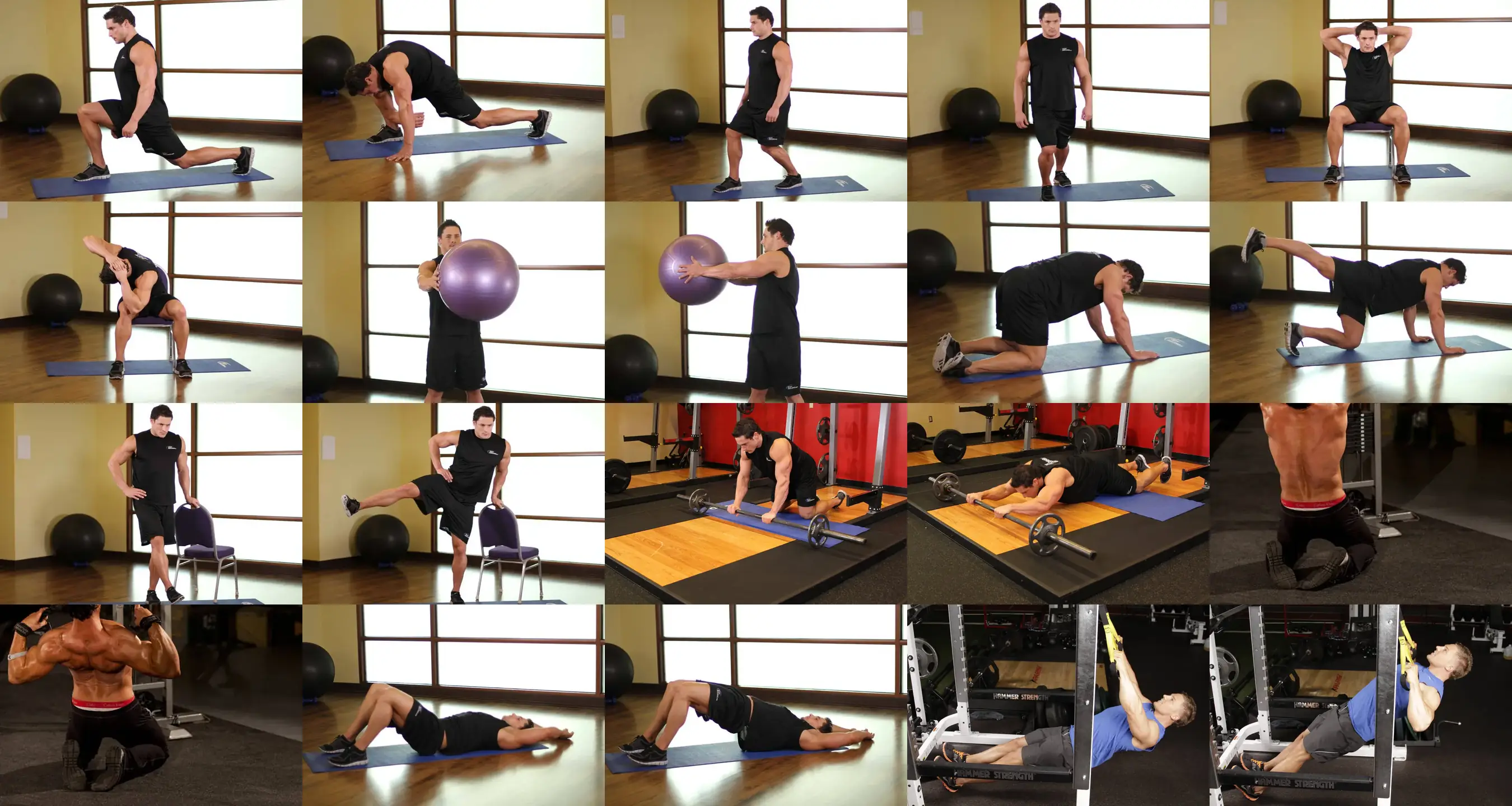
- Grab the handles with your palms facing each other, arms straight, and walk your feet toward the anchor point.
- Lean back with your body straight from heels to head, bracing your abs and glutes so your hips do not bend.
- Pull your shoulders down away from your ears and set your shoulder blades slightly back before you pull.
- Exhale and pull your chest toward your hands, driving your elbows back and keeping them close to your sides.
- Squeeze your shoulder blades for one second at the top, hands beside your ribs and wrists neutral.
- Inhale and lower slowly over two to three seconds until your arms are fully straight, holding the plank.
Form cues
- Your body rises in one piece, like a board
- Elbows back, chest to your hands
- Squeeze your shoulder blades for one second
- Shoulders stay away from your ears
Common mistakes
- Letting your hips sag: you lose core tension; squeeze your glutes like in a plank.
- Jutting your chin to reach: it strains your neck; bring your chest, not your face, to your hands.
- Dropping down fast: you waste the lowering phase; take two to three seconds on the way down.
- Shrugging your shoulders: your upper traps take over; set your shoulders down before every rep.
How to make it easier or harder
To make it easier, stand more upright or bend your knees with your feet flat. To progress, elevate your feet on a box, try a single-arm TRX row, or move to a weighted-vest bar inverted row and then pull-ups.
Sets and reps for your goal
Hypertrophy
3-4 x 8-12 · rest 60-90 s3-4 sets of 6-12 reps (up to 15-20 on isolation exercises) at 65-80% of your max. Rest 1 to 2 minutes.
Get close to failure (0-3 reps in reserve) and control the lowering for 2-3 seconds. Accumulate 10-20 sets per muscle per week.
Max Strength
4 x 5-8 · rest 2 min3-6 sets of 1-6 reps at 80-90% of your max (1RM). Rest 2 to 5 minutes.
Leave 1-3 reps in reserve. If your technique breaks down, lower the weight: strength is built with good reps.
A guide for healthy adults. Adjust the load to your level and see a professional if you have an injury.
Check your form
Film yourself from the side or ask someone to watch, then tick what you get right.
Frequently asked questions
Do TRX inverted rows help with pull-ups?
Yes. They build your lats, rhomboids, and biceps and teach you to control your shoulder blades, all key for pull-ups. Pair them with dead hangs and negative pull-ups to progress faster.
Is TRX or rings better for inverted rows?
Both work well. Rings let your wrists rotate freely, which many people find easier on the elbows. A TRX is quicker to adjust for length. Use whichever you have access to.
Sports it suits
Gear for this exercise
- Suspension trainerAnchors to a door or a bar.
As an Amazon Associate, Muscle Atlas earns from qualifying purchases.