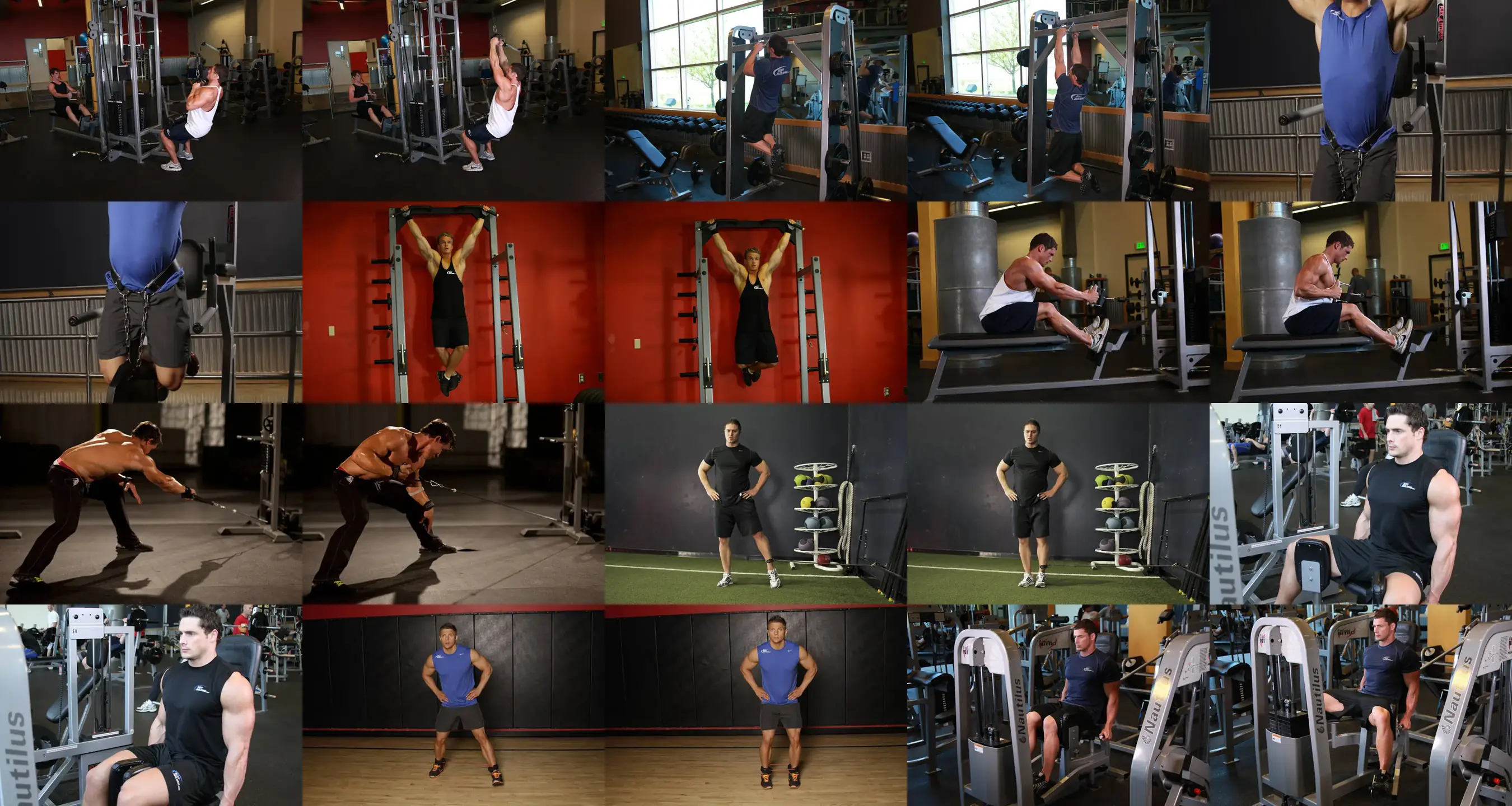
Setup and loading
Use a straight bar on the high pulley and set the pad so your thighs are locked in. Choose a weight that allows 8 to 12 reps to the chest without rocking your torso.
How to do the underhand lat pulldown step by step
- Grab the bar palms facing you, hands shoulder-width apart, and sit with your thighs under the pads.
- With arms straight, lean back a few degrees, lift your chest, and set your shoulders down.
- Exhale as you pull the bar to your upper chest, driving your elbows down and slightly back.
- Stop the bar just below your collarbone and squeeze your back for a second without rounding your shoulders.
- Inhale and let the bar rise slowly over two to three seconds until your arms are fully straight.
- Keep the same torso angle through the whole set with no momentum to drag the bar down.
Form cues
- Drive your elbows toward your hips
- Keep your chest tall and reach for the bar
- Set your shoulders down before every pull
- Control the bar up to full arm extension
Common mistakes
- Rocking back to pull the bar down: you rely on momentum; lighten up and hold your torso angle.
- Pulling the bar to your stomach: it turns into a row; stop at the upper chest.
- Rounding your shoulders at the bottom: it limits the lats; keep your chest up and shoulder blades together.
- Letting the bar fly up: you skip the eccentric; guide it until your arms are straight.
How to make it easier or harder
To regress, use less weight or a kneeling band pulldown. To progress, move to band or machine assisted chin-ups and then to bodyweight chin-ups.
Sets and reps for your goal
Hypertrophy
3-4 x 8-12 · rest 60-90 s3-4 sets of 6-12 reps (up to 15-20 on isolation exercises) at 65-80% of your max. Rest 1 to 2 minutes.
Get close to failure (0-3 reps in reserve) and control the lowering for 2-3 seconds. Accumulate 10-20 sets per muscle per week.
Max Strength
4-5 x 3-6 · rest 2-3 min3-6 sets of 1-6 reps at 80-90% of your max (1RM). Rest 2 to 5 minutes.
Leave 1-3 reps in reserve. If your technique breaks down, lower the weight: strength is built with good reps.
A guide for healthy adults. Adjust the load to your level and see a professional if you have an injury.
Check your form
Film yourself from the side or ask someone to watch, then tick what you get right.
Frequently asked questions
Does the underhand pulldown work the biceps more?
Yes, the underhand grip puts your biceps in a stronger position and involves them more than an overhand grip. Your lats still do most of the work as long as you drive the elbows down instead of curling the bar.
Is an underhand or overhand pulldown better?
Neither is better overall. The underhand grip usually allows more weight and shoulder range, while a wide overhand grip shifts the emphasis slightly toward the upper back. Rotating both works well.