Setup and loading
You need a few yards of firm, clear floor in front of you. Adjust difficulty with the distance of each hop, the depth of your squat, and how many hops you chain; start with 5 or 6 per set.
How to do the frog hops step by step
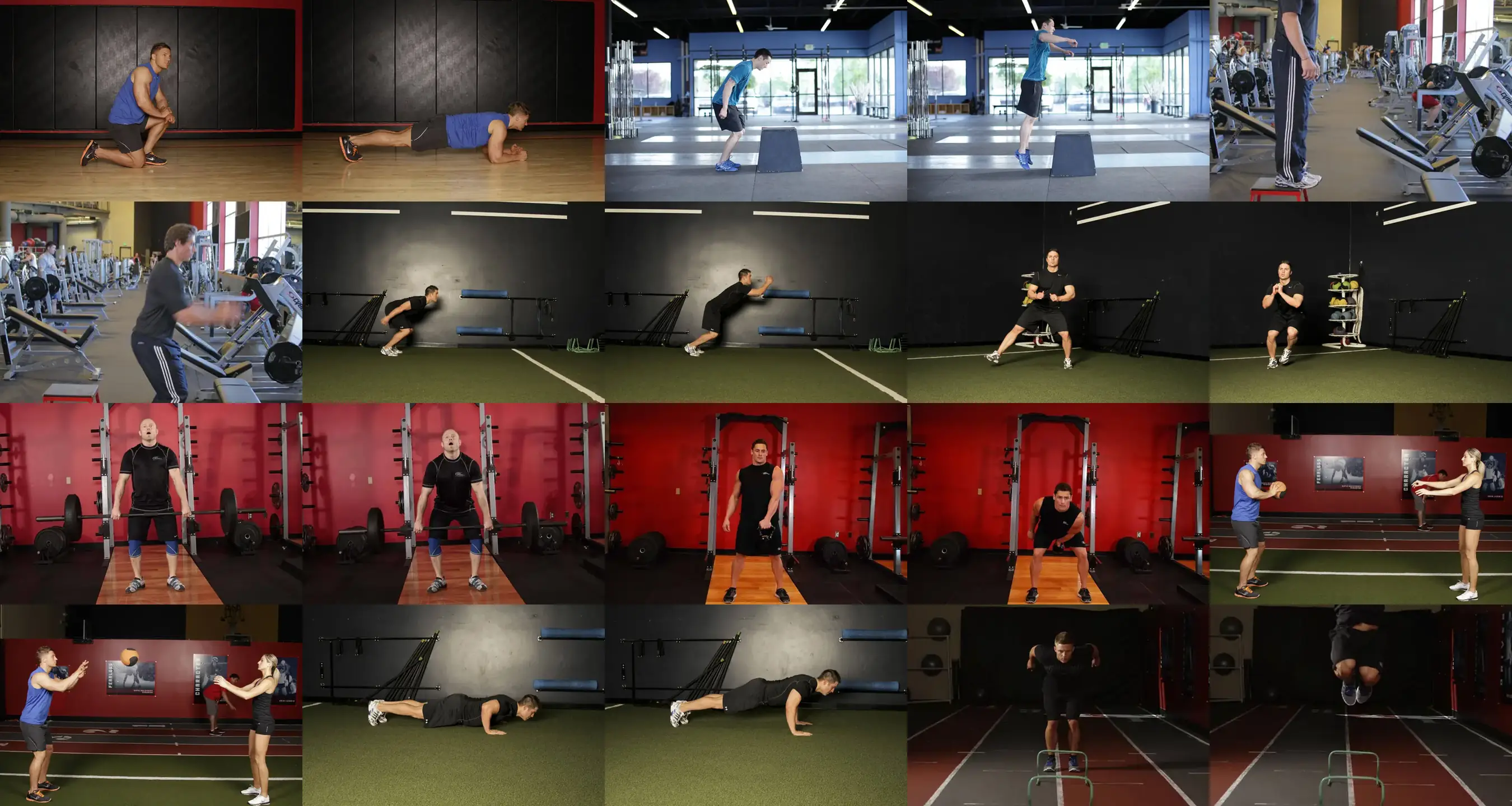
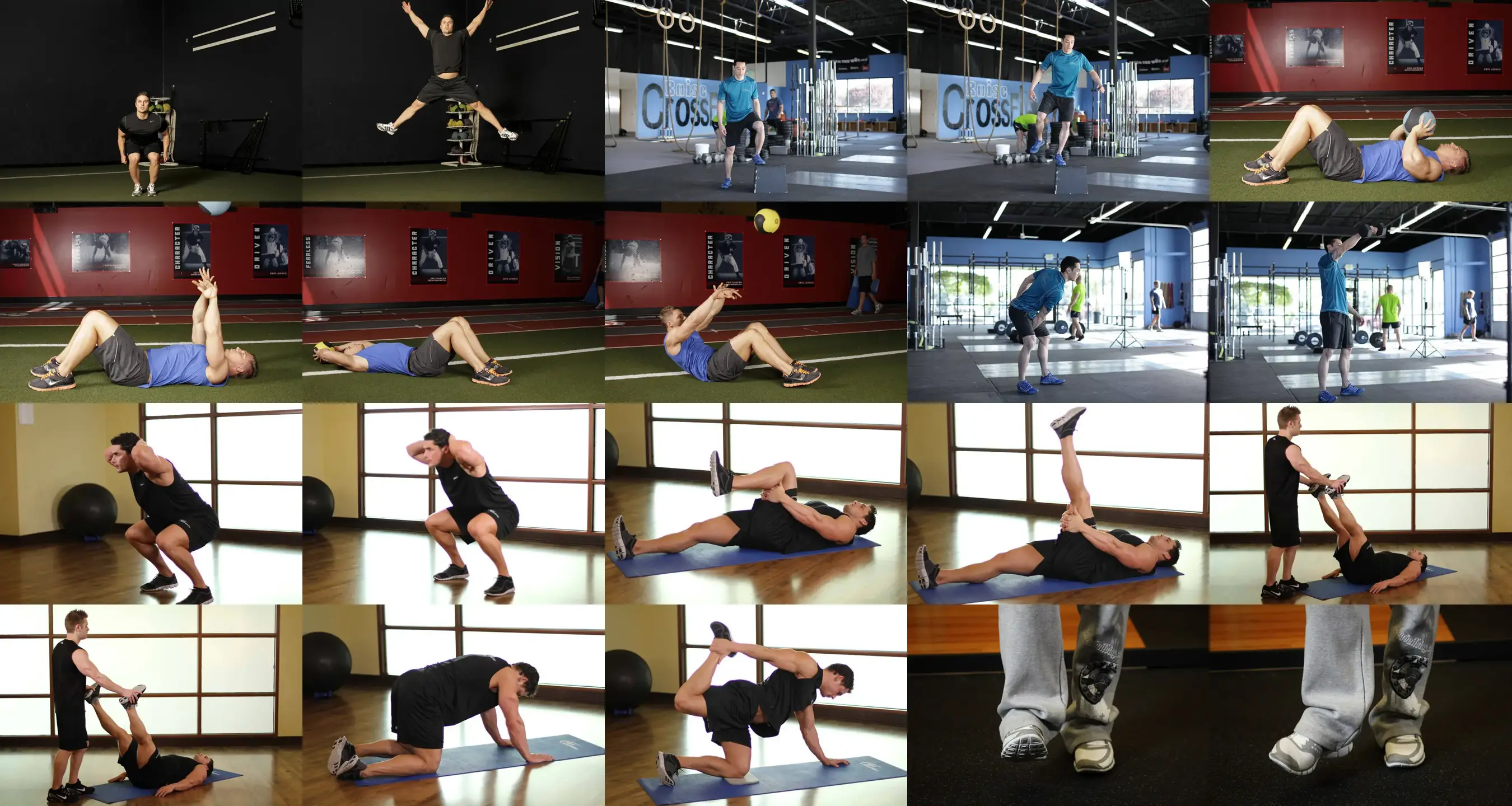
- Stand with feet shoulder width apart, lace your fingers behind your head, and sink into a deep squat with your chest tall.
- Breathe in at the bottom and keep your weight over midfoot, knees tracking in line with your toes.
- Exhale and jump forward by extending hips, knees, and ankles, aiming for distance rather than height.
- Land softly on your whole foot, letting knees and hips bend to absorb the impact.
- Drop straight back into the deep squat and launch the next hop without standing all the way up.
- After the last hop, stand up slowly, turn around, and walk back to recover.
Form cues
- Jump long and low, not up
- Chest tall and elbows wide
- Knees track over your toes
- Land quietly and sink right back down
Common mistakes
- Knees caving on landing: stresses knee ligaments; actively push knees out every time you land.
- Pulling on your head: strains the neck; rest your fingertips lightly and keep your gaze forward.
- Landing stiff legged: sends impact into knees and back; always bend and absorb.
- Jumping too high: breaks rhythm and tires you early; focus on horizontal distance and smooth linking.
How to make it easier or harder
To make it easier, do squat jumps in place or frog hops with a two second pause between each one. To progress, cover more distance, link more hops, or move to single-leg broad jumps and weighted vest hops.
Sets and reps for your goal
Mobility
2-3 x 20-40 s per side2-3 sets of 30-60 seconds or 8-10 slow reps. Daily or before training.
Work in a pain-free range with slow breathing. A little often is better than a lot once in a while.
A guide for healthy adults. Adjust the load to your level and see a professional if you have an injury.
Check your form
Film yourself from the side or ask someone to watch, then tick what you get right.
Frequently asked questions
What muscles do frog hops work?
They mainly hit your quads and glutes, with help from hamstrings and calves. Because you must brake and relaunch on every hop, they also build reactive leg strength and put a real demand on your cardiovascular system.
Are frog hops bad for your knees?
Not if you land softly, keep knees aligned, and use a depth you can control. If you have existing knee issues, shorten the distance, keep reps low, and build up with squat jumps before chaining horizontal hops.
Sports it suits
Gear for this exercise
- Exercise matThick (8-10 mm) for floor work.
As an Amazon Associate, Muscle Atlas earns from qualifying purchases.