Setup and loading
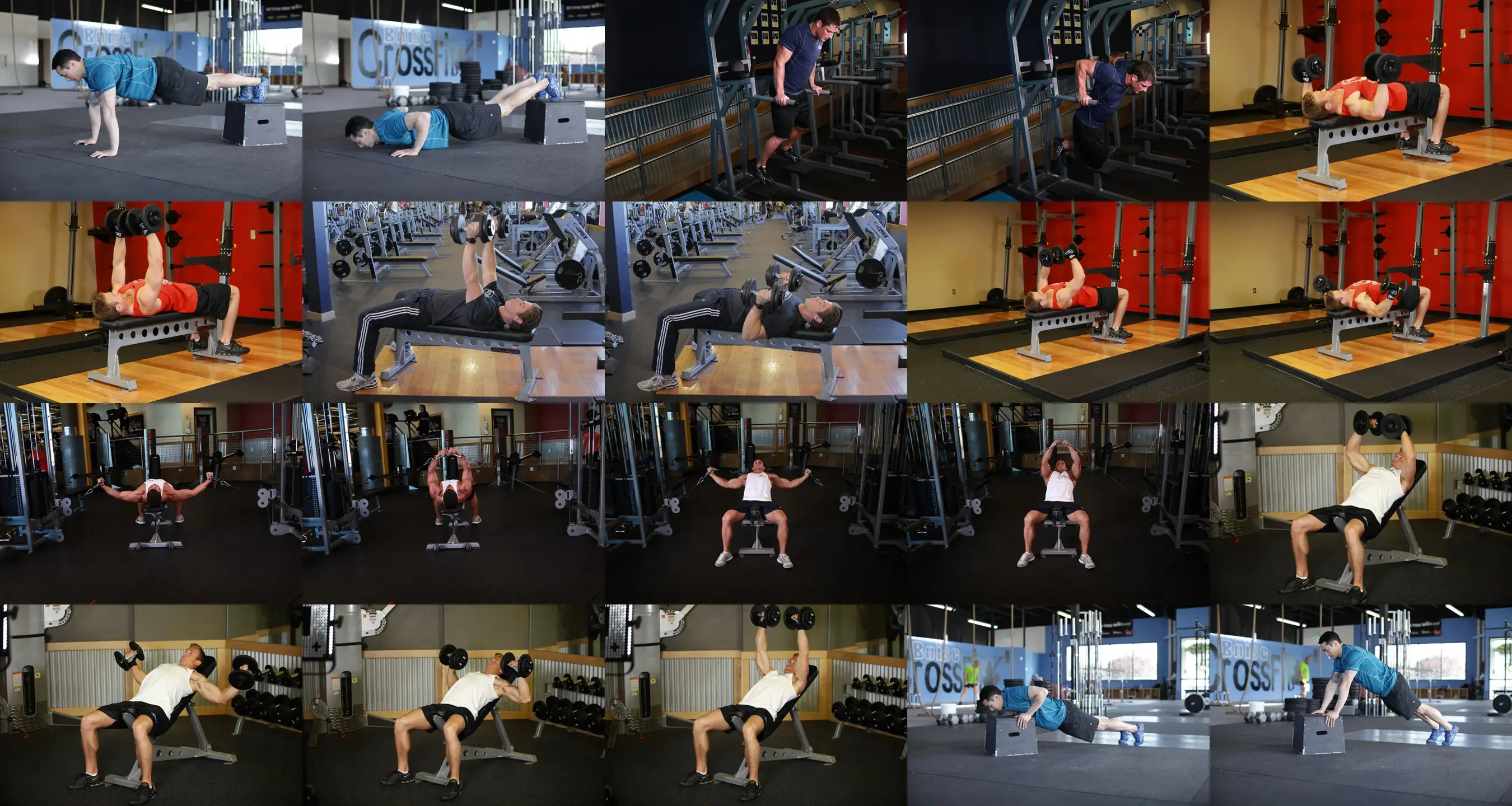
Set the bench to about 30 degrees and lie back with your feet planted and shoulder blades pulled together. Choose light dumbbells that allow 10 to 15 reps without your elbows bending more as you lower.
How to do the incline dumbbell fly step by step
- Lie on a bench set to 30 degrees with the dumbbells over your upper chest, palms facing each other.
- Soften your elbows, pull your shoulder blades together and keep your back and head on the pad.
- Breathe in and open your arms out to the sides in an arc until the dumbbells are about chest level.
- Feel the stretch across your upper chest without going past what feels comfortable for your shoulders.
- Exhale and close your arms along the same arc until the dumbbells meet over your upper chest.
- Squeeze your chest briefly at the top without clanking the dumbbells, then repeat at the same pace.
Form cues
- Bench at 30 degrees for the upper chest
- Elbow angle stays fixed from start to finish
- Open to a comfortable stretch, no further
- Close the dumbbells over your upper chest
Common mistakes
- Turning it into a press: elbows bend and straighten, so hold a fixed angle.
- Bench too steep: your shoulders take over, so stay around 30 degrees.
- Lowering too far: it stresses the front of the shoulder, so stop around chest level.
- Too much weight: you lose control in the stretch, so go light and lower slowly.
How to make it easier or harder
To regress, shorten the range or do flat bench flys. To progress, move to incline cable flys, add two-second pauses at the bottom or superset them with incline presses.
Sets and reps for your goal
Hypertrophy
3-4 x 8-12 · rest 60-90 s3-4 sets of 6-12 reps (up to 15-20 on isolation exercises) at 65-80% of your max. Rest 1 to 2 minutes.
Get close to failure (0-3 reps in reserve) and control the lowering for 2-3 seconds. Accumulate 10-20 sets per muscle per week.
Max Strength
4-5 x 3-6 · rest 2-3 min3-6 sets of 1-6 reps at 80-90% of your max (1RM). Rest 2 to 5 minutes.
Leave 1-3 reps in reserve. If your technique breaks down, lower the weight: strength is built with good reps.
A guide for healthy adults. Adjust the load to your level and see a professional if you have an injury.
Check your form
Film yourself from the side or ask someone to watch, then tick what you get right.
Frequently asked questions
Are incline flys better than incline press?
They do different jobs. The incline press allows more load and builds strength, while flys isolate and stretch the upper chest. Use the press as your base and flys as an accessory.
Why do I feel incline flys in my shoulders?
Usually because the bench is too steep, you lower too far or the weight is too heavy. Drop the angle to about 30 degrees, shorten the range and use lighter dumbbells.
Sports it suits
Gear for this exercise
- Adjustable dumbbellsSave space and replace a whole dumbbell rack at home.
As an Amazon Associate, Muscle Atlas earns from qualifying purchases.