Setup and loading
Tighten the straps over the widest part of your feet and set the damper between 3 and 5, which best mimics a real boat. Control intensity with the power of each stroke and your stroke rate, around 20 to 30 strokes per minute, not by cranking the damper to max.
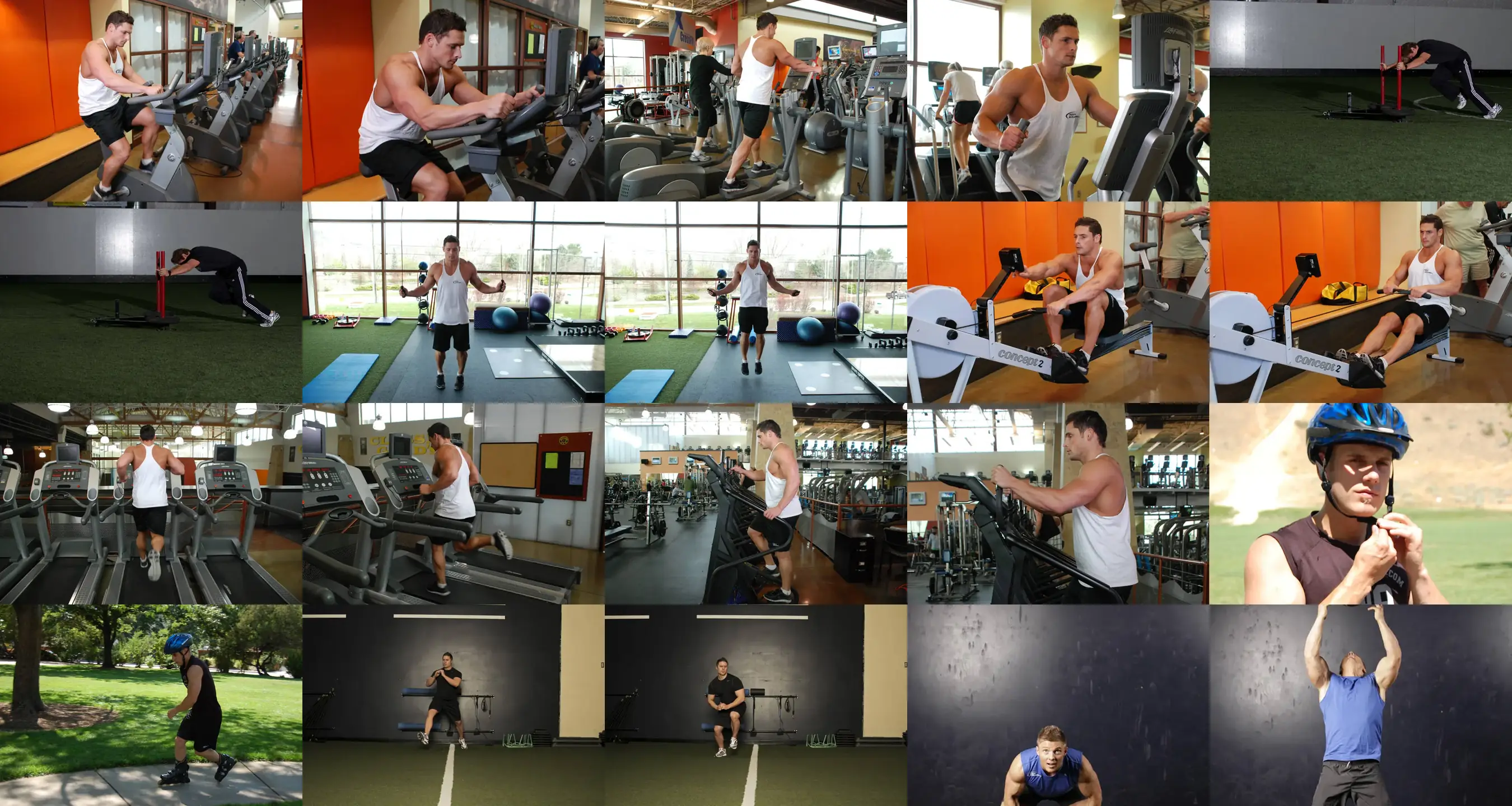
How to do the rowing machine step by step
- Sit on the seat, strap your feet in and grab the handle with your hands shoulder-width apart.
- Start at the catch: shins nearly vertical, arms straight and torso leaning slightly forward.
- Drive hard with your legs while your arms stay straight and your core stays braced, exhaling as you push.
- As your legs near full extension, swing your torso back slightly, to about the eleven o'clock position.
- Finish by pulling the handle to your lower ribs with your elbows close to your body.
- Recover in reverse: extend your arms, hinge your torso forward, then bend your knees as you inhale.
- Keep a rhythm where the recovery takes roughly twice as long as the drive.
Form cues
- Legs, body, arms; then arms, body, legs
- Neutral spine, hinge from the hips
- Handle travels in a straight line to your chest
- Fast drive, slow and relaxed recovery
Common mistakes
- Pulling with your arms first: you waste your leg power; drive before bending your elbows.
- Bending your knees before your hands pass them: the handle hits your knees; extend arms first.
- Rounding your back at the catch: it loads your lower back; hinge from the hips, chest proud.
- Damper at max: it fatigues your back without better cardio; use a setting of 3 to 5.
How to make it easier or harder
If you're new, practice arms-only strokes, then arms and body, and finally the full stroke at an easy pace. To progress, do 500-meter intervals, pieces at a higher stroke rate, or a 2,000-meter test to track your improvement.
Sets and reps for your goal
Endurance
20-45 min easy or intervals 6-10 x 1 min2-4 sets of 15-30 reps or 30-60 seconds at 40-60% of your max. Rest 30 to 60 seconds.
Steady pace and clean technique to the end. Circuits help you build volume with little rest.
A guide for healthy adults. Adjust the load to your level and see a professional if you have an injury.
Check your form
Film yourself from the side or ask someone to watch, then tick what you get right.
Frequently asked questions
Is the rowing machine good for weight loss?
Yes, because it uses a lot of muscle and allows long, low-impact sessions, which adds up to solid energy burn. It works best combined with sensible nutrition and strength training during the week.
What damper setting should I use on a rowing machine?
A damper setting between 3 and 5 suits most people. A higher setting doesn't mean a better workout: it makes each stroke heavier and slower. Real intensity comes from how hard you drive with your legs.