Setup and loading
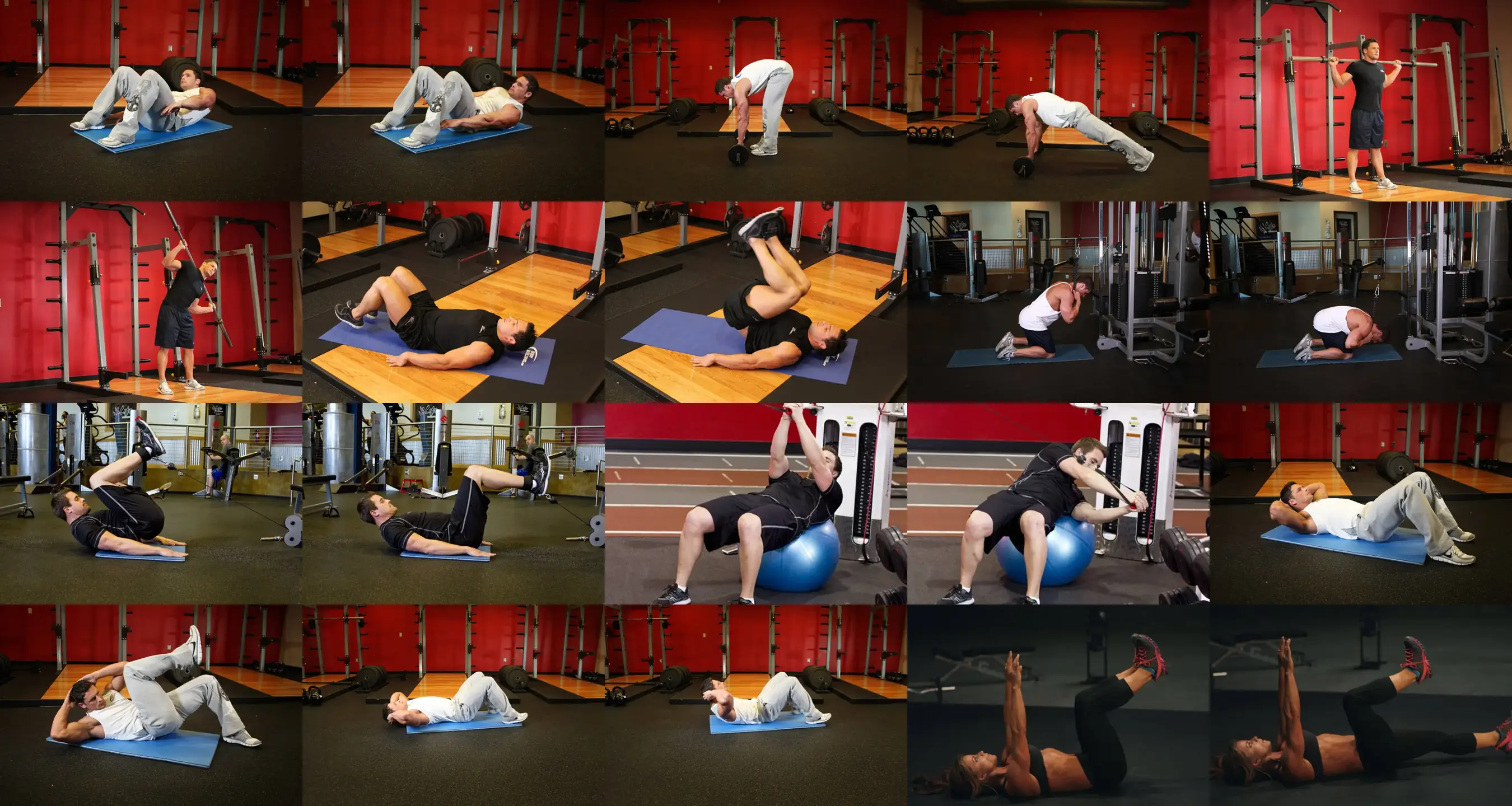
Lie on a mat with knees bent and feet flat, either free or anchored under a support if you cannot come up yet. Make it harder by crossing your arms on your chest, reaching them overhead or holding a plate.
How to do the sit-up step by step
- Lie on your back with knees bent, feet flat and arms crossed over your chest.
- Press your lower back into the floor and breathe in.
- Exhale and curl your head and shoulders first, peeling your spine off the floor one segment at a time.
- Keep rising until you sit tall with your torso upright, without jerking.
- Breathe in at the top and lower slowly, uncurling your spine from the lower back up.
- Set your back down and then your shoulders, and rise again without bouncing.
Form cues
- Curl first, then sit up
- Feet stay planted
- No jerking or arm swinging
- Lower by uncurling your spine
Common mistakes
- Jerking up with a flat back: loads your lower back; curl your spine from the top.
- Throwing your arms for momentum: reduces ab work; cross them on your chest.
- Pulling your neck with your hands: causes strain; do not lace fingers behind your head.
- Dropping back down: skips the eccentric; take two or three seconds to lower.
How to make it easier or harder
If you cannot sit up yet, anchor your feet or start with crunches and slow lowers from seated. To progress, do sit ups on a decline bench or hold a plate against your chest.
Sets and reps for your goal
Core & Stability
3 x 8-15 or 20-45 s3-4 sets of 20-45 seconds or 8-12 slow reps. Rest 45 to 60 seconds.
Neutral spine, tight abs and controlled breathing. Progress in time or leverage before adding weight.
A guide for healthy adults. Adjust the load to your level and see a professional if you have an injury.
Check your form
Film yourself from the side or ask someone to watch, then tick what you get right.
Frequently asked questions
What is the difference between a crunch and a sit up?
In a crunch you only lift your shoulders and it trains almost only your abs. In a sit up you come all the way up, so your hip flexors work hard during the second half of the movement.
Are sit ups bad for your back?
They do not have to be if you perform them with control, curling your spine and avoiding jerks. If your lower back complains, cut the volume or switch to crunches and anti extension work like planks.
Sports it suits
Gear for this exercise
- Exercise matThick (8-10 mm) for floor work.
As an Amazon Associate, Muscle Atlas earns from qualifying purchases.