Setup and loading
Place a step or plate under the bar and stand with your heels on the edge and the front of your feet hanging off. Use a moderate weight for 15 to 25 reps; the tibialis is small and fatigues quickly.
How to do the smith machine tibialis raise step by step
- Place a step under the Smith bar and stand with your heels on the edge and the front of your feet hanging off.
- Set the bar on your upper traps, unhook it, and stand tall with your knees nearly straight.
- Let your toes drop below the level of the step to stretch the front of your shin.
- Exhale and pull your toes up toward your shins as high as possible, moving only at the ankle.
- Hold for one second at the top, feeling tension in the front of your leg.
- Inhale, lower your toes slowly, and rehook the bar when you finish.
Form cues
- Only your ankles move
- Toes up toward your shins
- One-second pause at the top
- Slow, full lowering
Common mistakes
- Bouncing your toes: you lose control and tension; pause at the top and bottom.
- Shifting your hips back to lift: your body compensates; stay upright.
- Too much load: the tibialis is small and range suffers; prioritize clean reps.
- Heels poorly set on the edge: you can slip; plant them firmly and centered on the step.
How to make it easier or harder
To make it easier, do it unloaded with your back against a wall and heels slightly forward. To progress, use a dedicated tib bar, add weight on the Smith machine, or go single-leg.
Sets and reps for your goal
Hypertrophy
3 x 10-15 · rest 60 s3-4 sets of 6-12 reps (up to 15-20 on isolation exercises) at 65-80% of your max. Rest 1 to 2 minutes.
Get close to failure (0-3 reps in reserve) and control the lowering for 2-3 seconds. Accumulate 10-20 sets per muscle per week.
Injury Prevention
2-3 x 10-15 slow2-3 sets of 10-15 slow reps with a light or moderate load, 2-3 times per week.
Control the lowering (about 3 seconds). This is quality work, not fatigue work: finish every set feeling good.
A guide for healthy adults. Adjust the load to your level and see a professional if you have an injury.
Check your form
Film yourself from the side or ask someone to watch, then tick what you get right.
Frequently asked questions
Why train the tibialis anterior?
The tibialis controls your foot as your heel lands when running and manages the descent on stairs or hills. Strengthening it balances the lower leg against the calves and is common in programs for runners and jumping athletes.
Can I train my tibialis without a machine?
Yes. The simplest option is leaning your back against a wall with your heels about a foot out and lifting your toes. You can also use a band around your forefoot or a dumbbell held between your feet while seated on a bench.
Sports it suits
Variations and similar exercises
Standing Calf Raise
Barbell Seated Calf Raise
Leg Press Calf Press
Banded Calf Raise
Seated Single-Leg Dumbbell Calf Raise
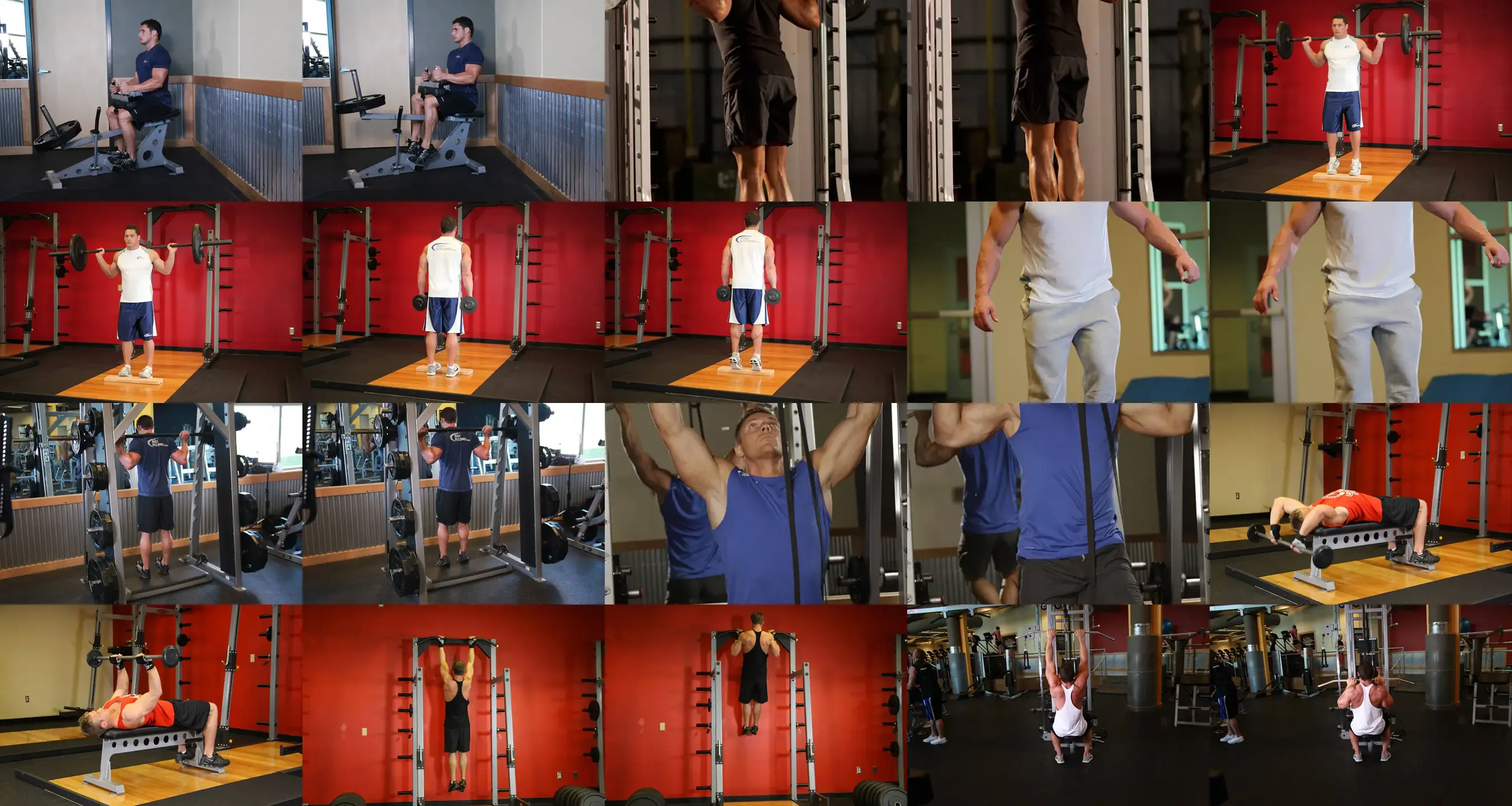
Seated Calf Raise Machine
Smith Machine Calf Raise