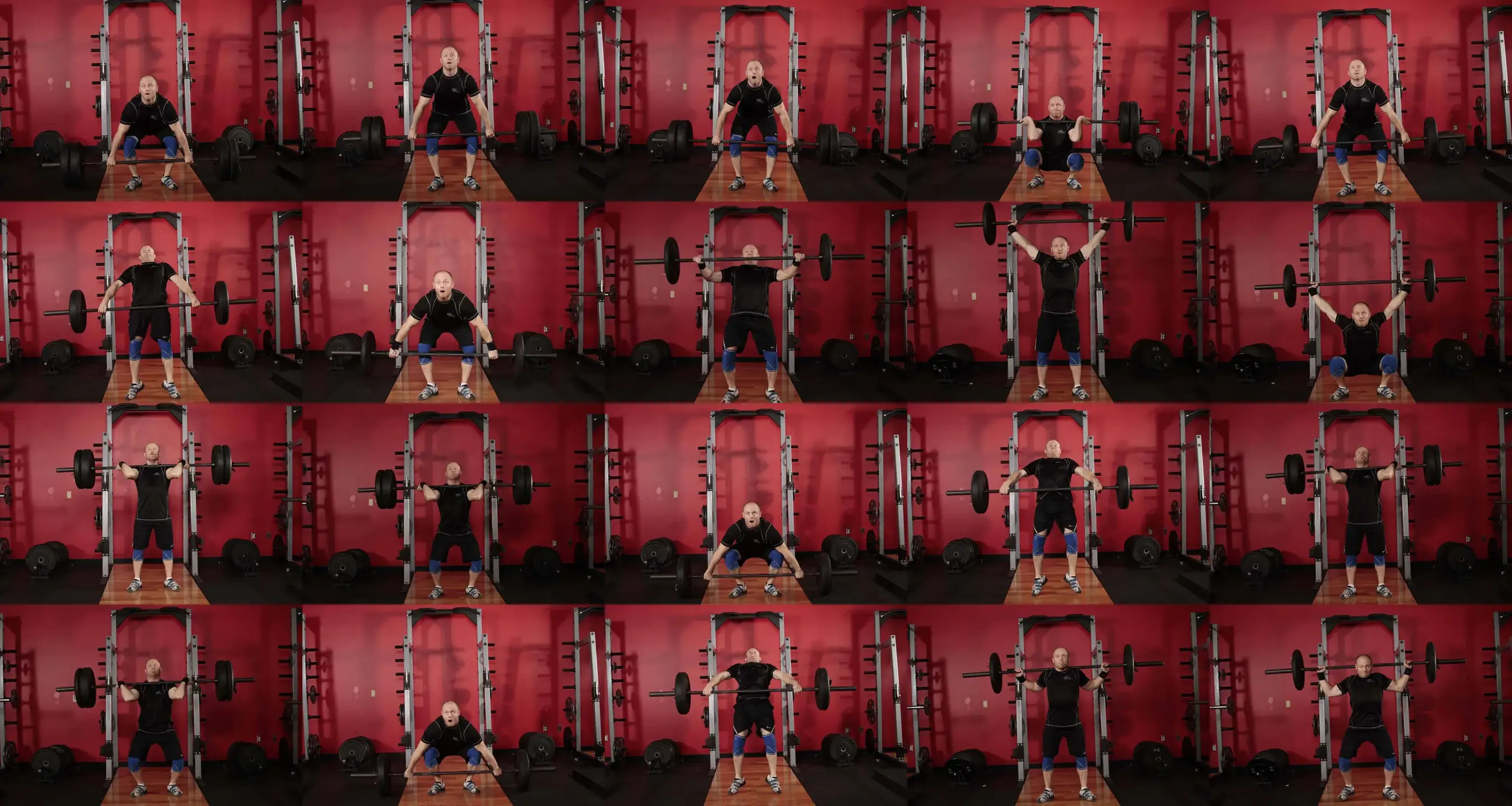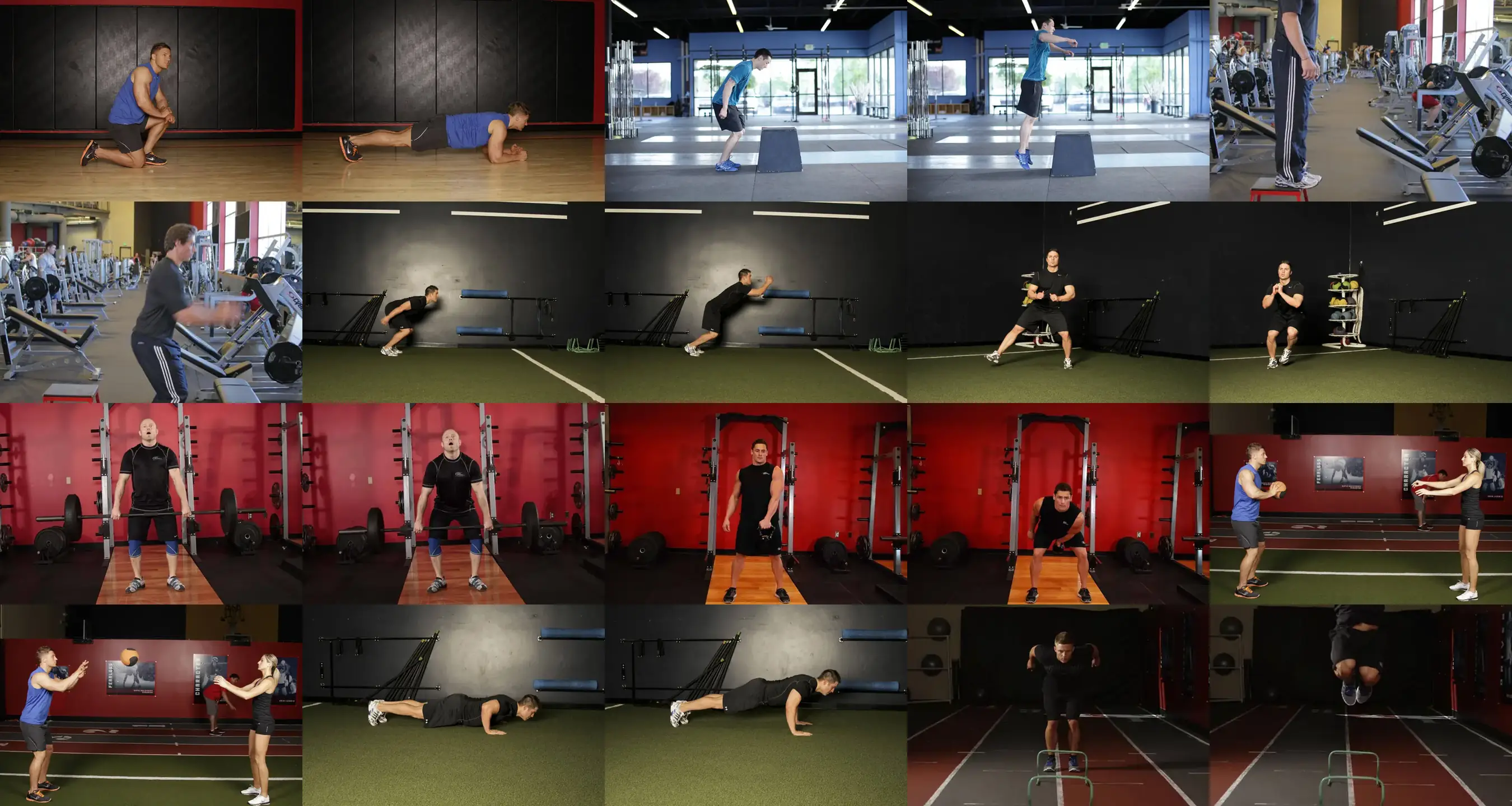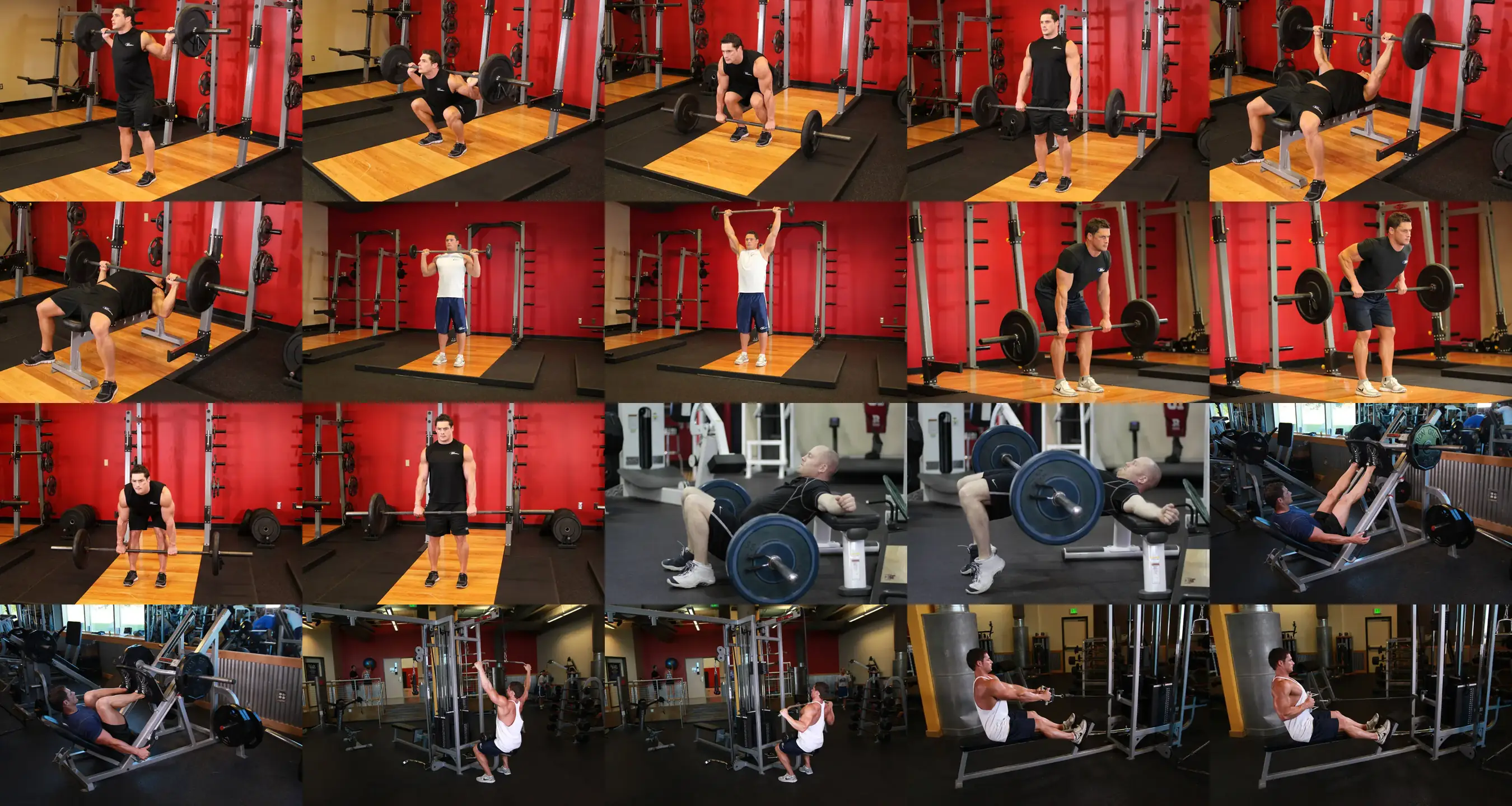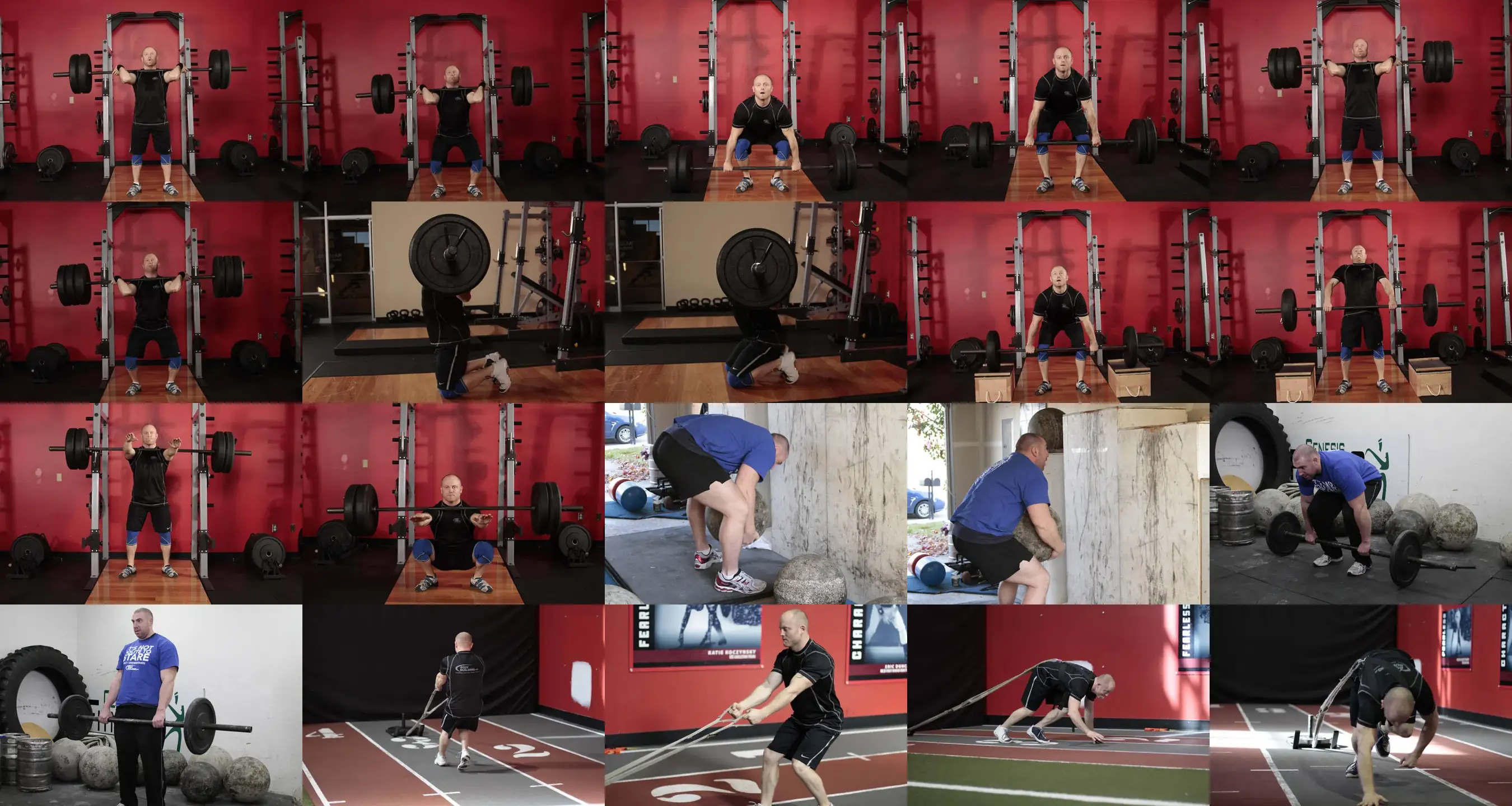
Setup and loading
Hold the bar in the front rack with a grip slightly wider than your shoulders. Find your preferred front foot with a dowel first, and add load once your split is consistent in length and width.
How to do the split jerk step by step
- With the bar in the front rack and feet hip width apart, breathe in and brace your torso.
- Dip your knees a few inches straight down, keeping weight across your whole foot and chest up.
- Drive explosively through your legs to launch the bar, moving your head slightly back.
- Drop under by splitting your feet: front foot steps forward with bent knee, back foot steps back onto the ball.
- Catch with locked arms, bar over the back of your neck, and weight shared between both legs.
- Recover by stepping the front foot back a little, then the back foot forward; exhale and lower the bar.
Form cues
- Short, vertical dip before you drive
- Both feet move at the same time
- Front knee stacked over the ankle
- Recover with your front foot first
Common mistakes
- Splitting on a tightrope: the base is unstable; keep feet hip width apart side to side.
- All weight on the front leg: the bar falls forward; share weight between both legs.
- Locked straight back knee: you lose cushioning; keep it slightly bent.
- Recovering with the back foot first: it shifts the bar; step the front foot back first.
How to make it easier or harder
To learn it, practice the push press and split footwork with no bar or a dowel, then the power jerk. To progress, add load, try behind the neck split jerks, or use it in complexes with cleans.
Sets and reps for your goal
Power
4-6 x 2-5 · full rest3-6 sets of 1-5 reps with light or moderate loads (30-60% of your max on the main lifts), or with a ball or your bodyweight. Rest 2 to 3 minutes.
Every rep at the highest possible speed. As soon as you notice it moving slower (a 10-20% velocity loss), end the set. Train power fresh, never fatigued.
Max Strength
4-5 x 3-6 · rest 2-3 min3-6 sets of 1-6 reps at 80-90% of your max (1RM). Rest 2 to 5 minutes.
Leave 1-3 reps in reserve. If your technique breaks down, lower the weight: strength is built with good reps.
A guide for healthy adults. Adjust the load to your level and see a professional if you have an injury.
Check your form
Film yourself from the side or ask someone to watch, then tick what you get right.
Frequently asked questions
Which foot goes forward in a split jerk?
Usually the foot you naturally step out with when you fall forward or push something. A simple test is to lean forward until you have to catch yourself. Drill both sides with a dowel and keep the one that feels more stable.
How long should my split jerk be?
As a guide, your front shin should be close to vertical and your back knee slightly bent with the back foot on its ball. Too short loses stability, while too long makes recovery hard.
Sports it suits
Gear for this exercise
- Olympic barbell and platesTo keep progressing on the big lifts with heavy loads.
As an Amazon Associate, Muscle Atlas earns from qualifying purchases.