Setup and loading
Get into a plank with hands under your shoulders and shins on the ball; the farther toward your feet the ball sits, the harder it gets. Start with the ball under your shins and do sets of 8 to 12 controlled reps.
How to do the stability ball knee tuck step by step
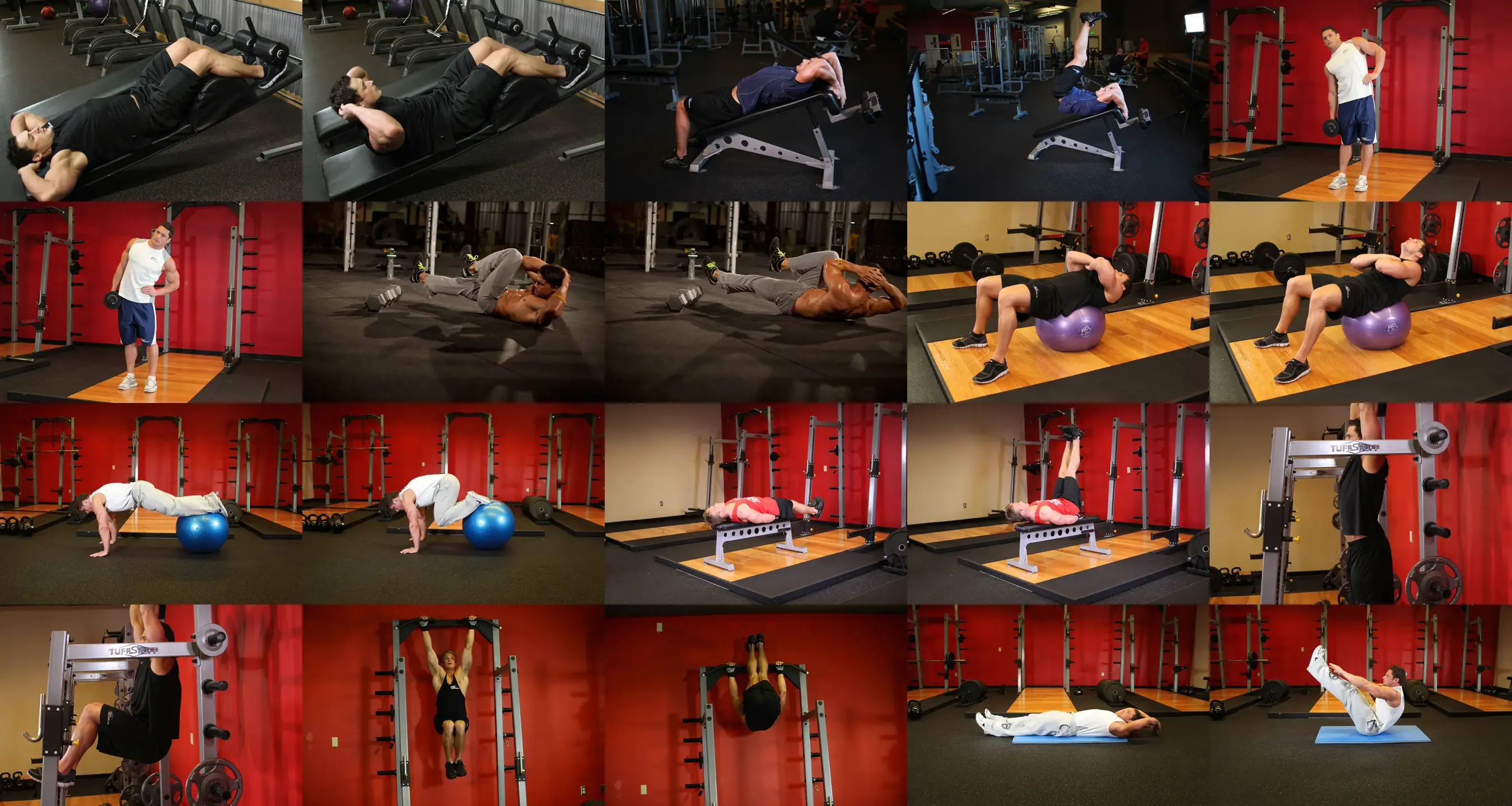
- Kneel in front of the ball, place your hands on the floor and roll out until your shins rest on the ball in a high plank.
- Line up shoulders, hips and ankles, brace your abs and glutes and breathe in.
- Exhale and pull your knees toward your chest, letting the ball roll toward your hands.
- Round your lower back slightly at the end to curl your pelvis, keeping shoulders over wrists.
- Breathe in and extend your legs slowly back to the plank.
- Check that your hips have not sagged before starting the next rep.
Form cues
- Shoulders stacked over wrists
- Knees to chest, pelvis curled
- Return to a straight plank
- Tight abs, no sagging hips
Common mistakes
- Hips sagging as you extend: loads the lower back; shorten the range and squeeze your glutes.
- Shoulders behind your hands: strains the wrists; keep shoulders stacked above.
- Tucking without curling the pelvis: only hip flexors work; round slightly at the end.
- Moving too fast: the ball gets away from you; take two seconds each way.
How to make it easier or harder
If you cannot control the ball yet, practice a high plank with feet on the ball or slow mountain climbers. To progress, move to the stability ball pike, lifting your hips with straight legs, or try single leg tucks.
Sets and reps for your goal
Core & Stability
3 x 8-15 or 20-45 s3-4 sets of 20-45 seconds or 8-12 slow reps. Rest 45 to 60 seconds.
Neutral spine, tight abs and controlled breathing. Progress in time or leverage before adding weight.
A guide for healthy adults. Adjust the load to your level and see a professional if you have an injury.
Check your form
Film yourself from the side or ask someone to watch, then tick what you get right.
Frequently asked questions
What does a stability ball knee tuck work?
It works your abs, especially the rectus abdominis and transverse abdominis, along with the hip flexors. It also demands a lot of shoulder and core stability to hold a plank on an unstable ball.
Is a ball tuck better than a TRX knee tuck?
Both work well. The ball adds rolling instability and is easy to set up at home. With a suspension trainer your feet hang from straps and swing differently, which demands more shoulder control.
Sports it suits
Gear for this exercise
- Stability ballPick the diameter for your height (55-65 cm for most people).
As an Amazon Associate, Muscle Atlas earns from qualifying purchases.