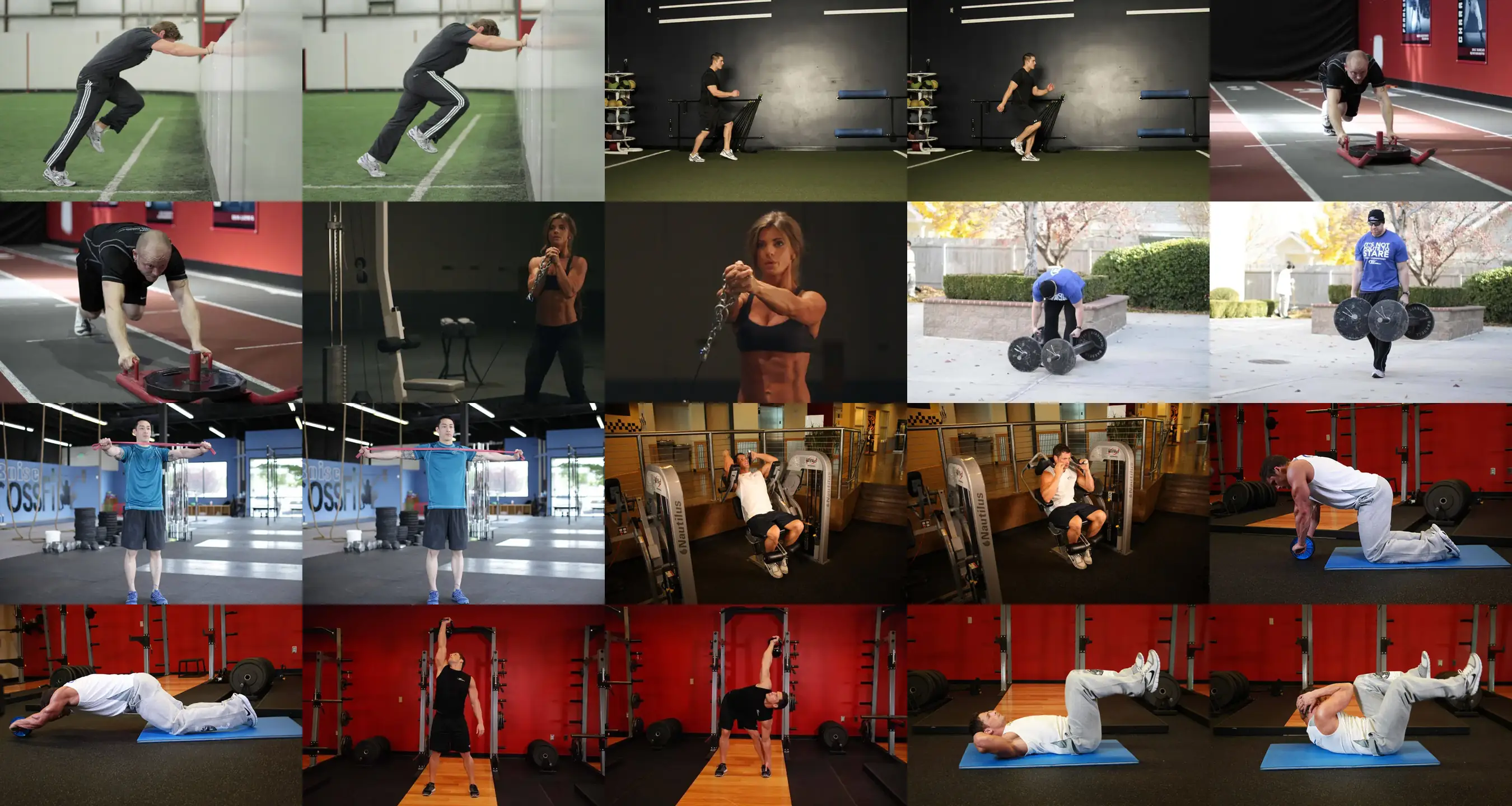
Setup and loading
Attach ropes or handles to the sled with enough length that your arms stay straight in front of you. Choose a weight that lets you take continuous steps without stopping for 15 to 30 yards.
How to do the backward sled drag step by step
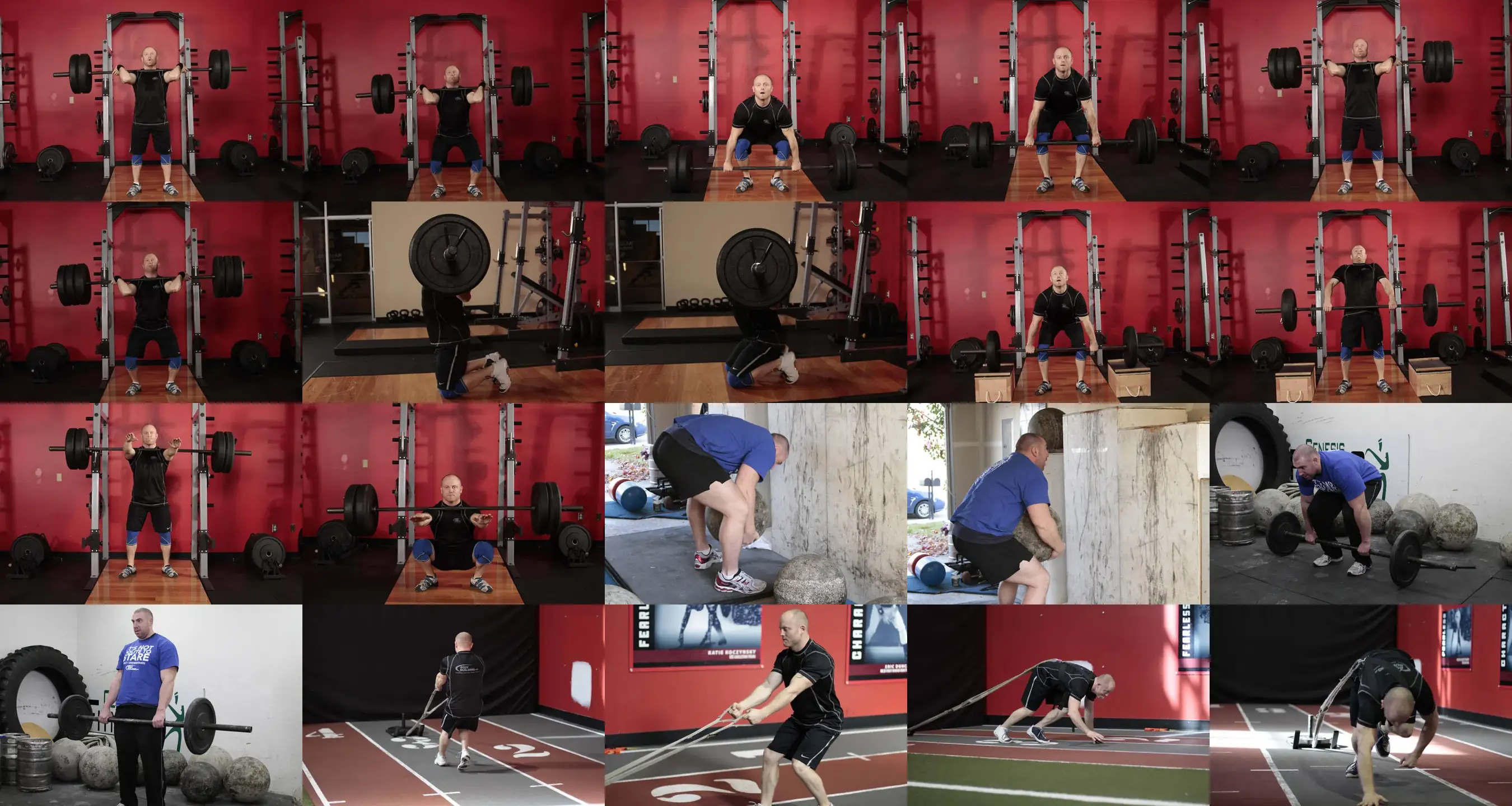
- Place the sled in front of you, hold a rope or handle in each hand, and step back until they are taut with straight arms.
- Bend your knees, lean back slightly with a firm torso, and set your feet about hip width apart.
- Take a short step back landing on the ball of your foot, then push the floor away by straightening your knee.
- Keep taking short, quick steps with the ropes taut and your knees bent the whole time.
- Breathe rhythmically, inhaling every one or two steps without losing your brace.
- At the end of the distance, stop under control and release the ropes without jerking.
Form cues
- Knees stay bent the whole drag
- Short steps, land on the ball first
- Straight arms like ropes, no pulling
- Keep the ropes taut, never jerky
Common mistakes
- Pulling with the arms: they tire before your legs; keep them straight and push with legs.
- Steps too long: you lose tension and balance; make them short and quick.
- Locking the knees out: the quads rest; keep them bent on every step.
- Not checking the space behind you: you can trip; clear the area before starting.
How to make it easier or harder
To make it easier, lighten the sled or shorten the distance. To progress, add load, lengthen the runs, pair it with forward drags, or do backward drags with a waist harness and free arms.
Sets and reps for your goal
Max Strength
4-5 x 3-6 · rest 2-3 min3-6 sets of 1-6 reps at 80-90% of your max (1RM). Rest 2 to 5 minutes.
Leave 1-3 reps in reserve. If your technique breaks down, lower the weight: strength is built with good reps.
Endurance
2-4 x 15-25 or 30-60 s2-4 sets of 15-30 reps or 30-60 seconds at 40-60% of your max. Rest 30 to 60 seconds.
Steady pace and clean technique to the end. Circuits help you build volume with little rest.
A guide for healthy adults. Adjust the load to your level and see a professional if you have an injury.
Check your form
Film yourself from the side or ask someone to watch, then tick what you get right.
Frequently asked questions
What are backward sled drags good for?
They build quad strength and work capacity with almost no eccentric phase, which keeps soreness low. They are common in athletic training, conditioning, and as a knee friendly quad exercise for many people.
How much weight should I put on the sled?
It depends on the surface and sled, but pick a weight that lets you walk continuously for 15 to 30 yards with good form. If you stall or lean way back, take some weight off.