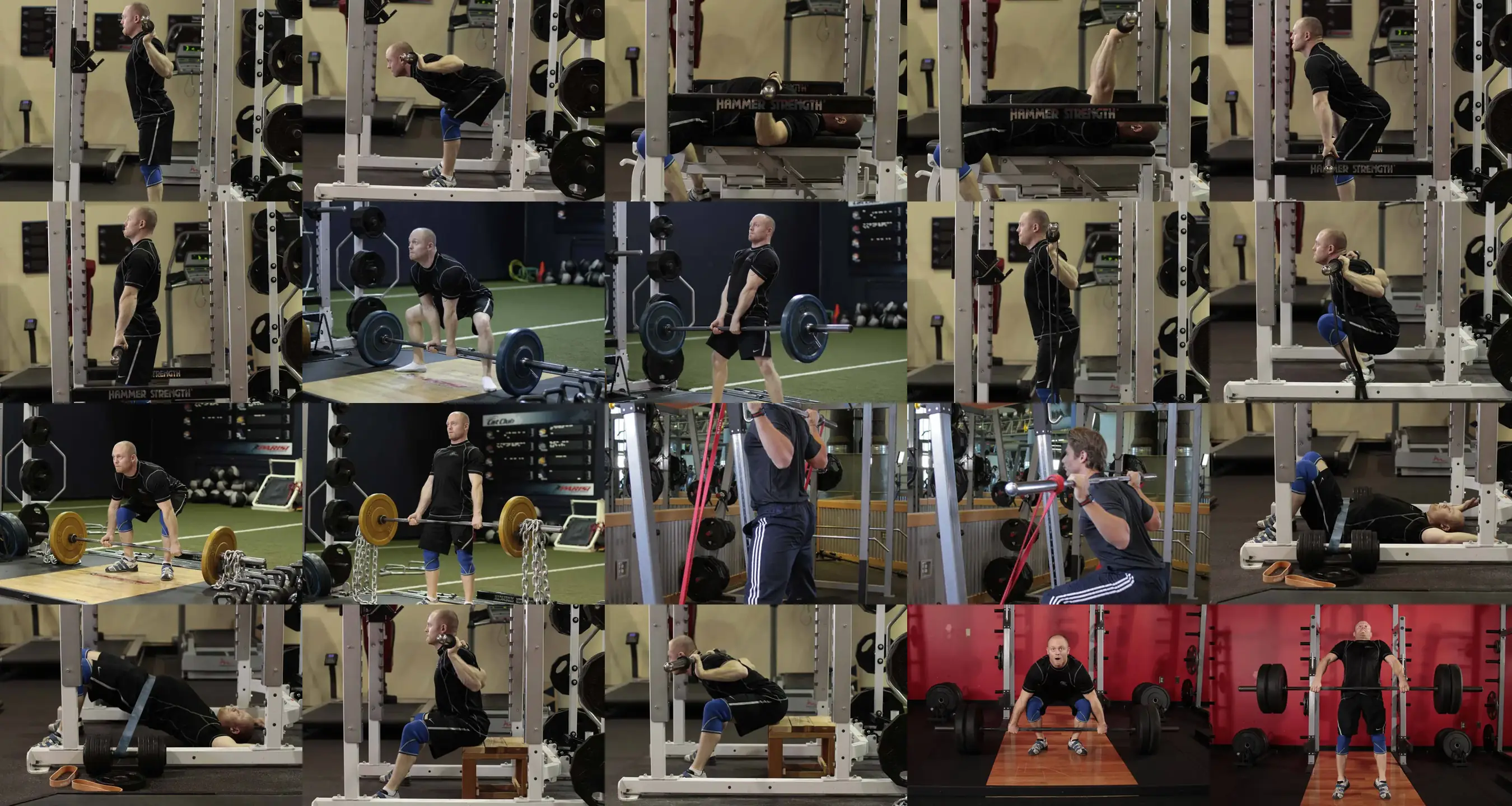
Setup and loading
Lie with the band across the top of your hips, anchored low on both sides, with feet about a foot from your glutes. Pick a band that lets you do 12 to 20 reps with a strong squeeze at the top.
How to do the banded hip bridge step by step
- Anchor the band on both sides to a rack base or two heavy dumbbells, then lie on your back underneath it.
- Position the band across your hip bones, bend your knees, and set your feet flat about hip width apart.
- Take a breath, brace your abs, and tuck your pelvis slightly so your lower back does not arch.
- Drive through your heels and lift your hips until you form a straight line from knees to shoulders, exhaling as you rise.
- Squeeze your glutes at the top for one to two seconds against peak band tension.
- Lower your hips slowly until they almost touch the floor, then repeat without losing tension.
Form cues
- Push through your heels, not toes
- Keep ribs down and pelvis slightly tucked
- Squeeze your glutes hard at the top
- Keep your knees tracking over your feet
Common mistakes
- Arching the lower back at the top: it shifts work off the glutes; tuck the pelvis and drop ribs.
- Feet too far away: it loads the hamstrings more; bring them closer for vertical shins at the top.
- Poorly anchored band: it can slip and snap; use heavy anchors and test before starting.
- Knees caving in: it reduces glute activation; press them slightly outward.
How to make it easier or harder
To make it easier, do bodyweight glute bridges without a band. To progress, use a thicker band, try single leg banded bridges, or move on to barbell glute bridges or bench hip thrusts.
Sets and reps for your goal
Max Strength
4-5 x 3-6 · rest 2-3 min3-6 sets of 1-6 reps at 80-90% of your max (1RM). Rest 2 to 5 minutes.
Leave 1-3 reps in reserve. If your technique breaks down, lower the weight: strength is built with good reps.
A guide for healthy adults. Adjust the load to your level and see a professional if you have an injury.
Check your form
Film yourself from the side or ask someone to watch, then tick what you get right.
Frequently asked questions
Do banded glute bridges build glutes?
Yes, they can stimulate glute growth if you take sets close to failure with good form, thanks to high tension at the top. For long term progress, increase band tension or add barbell bridges over time.
Where do you anchor the band for hip bridges?
Most people anchor it to the base of a power rack or to two heavy dumbbells on each side, at floor level. The band should stay taut across your hips even at the bottom. Check that the anchors cannot slide.
Sports it suits
Gear for this exercise
- Resistance bandsSeveral strengths to progress and warm up before training.
As an Amazon Associate, Muscle Atlas earns from qualifying purchases.