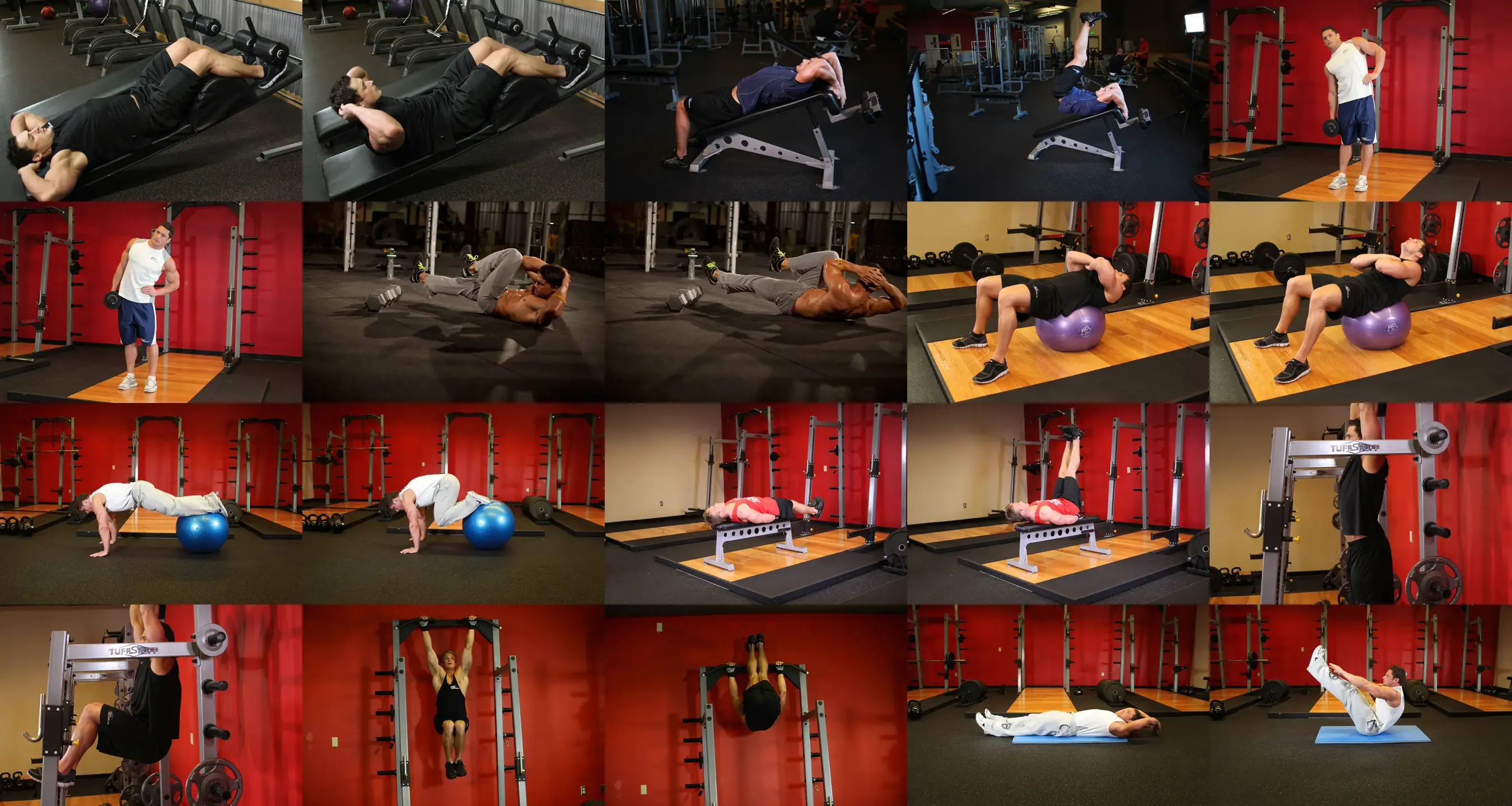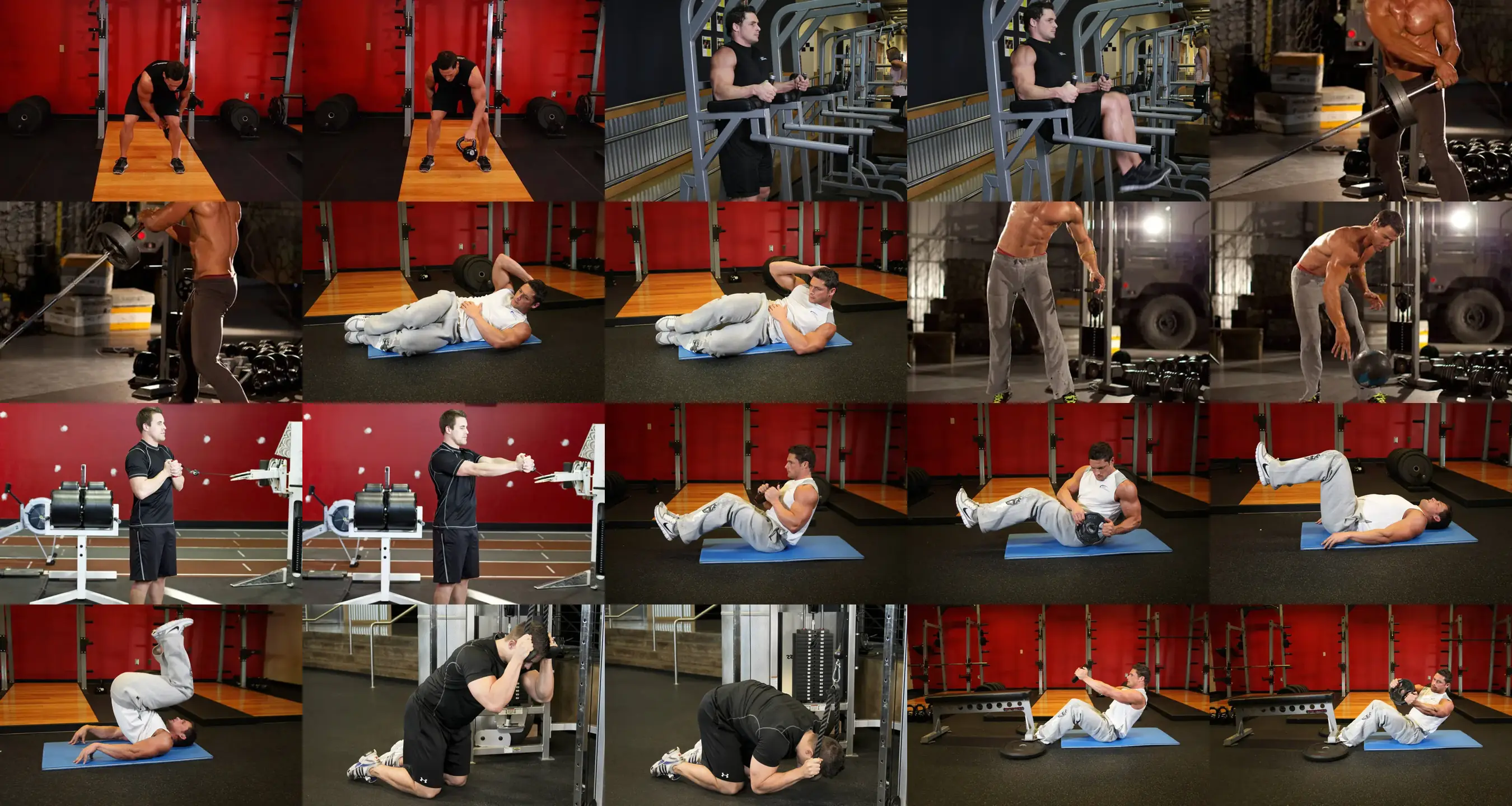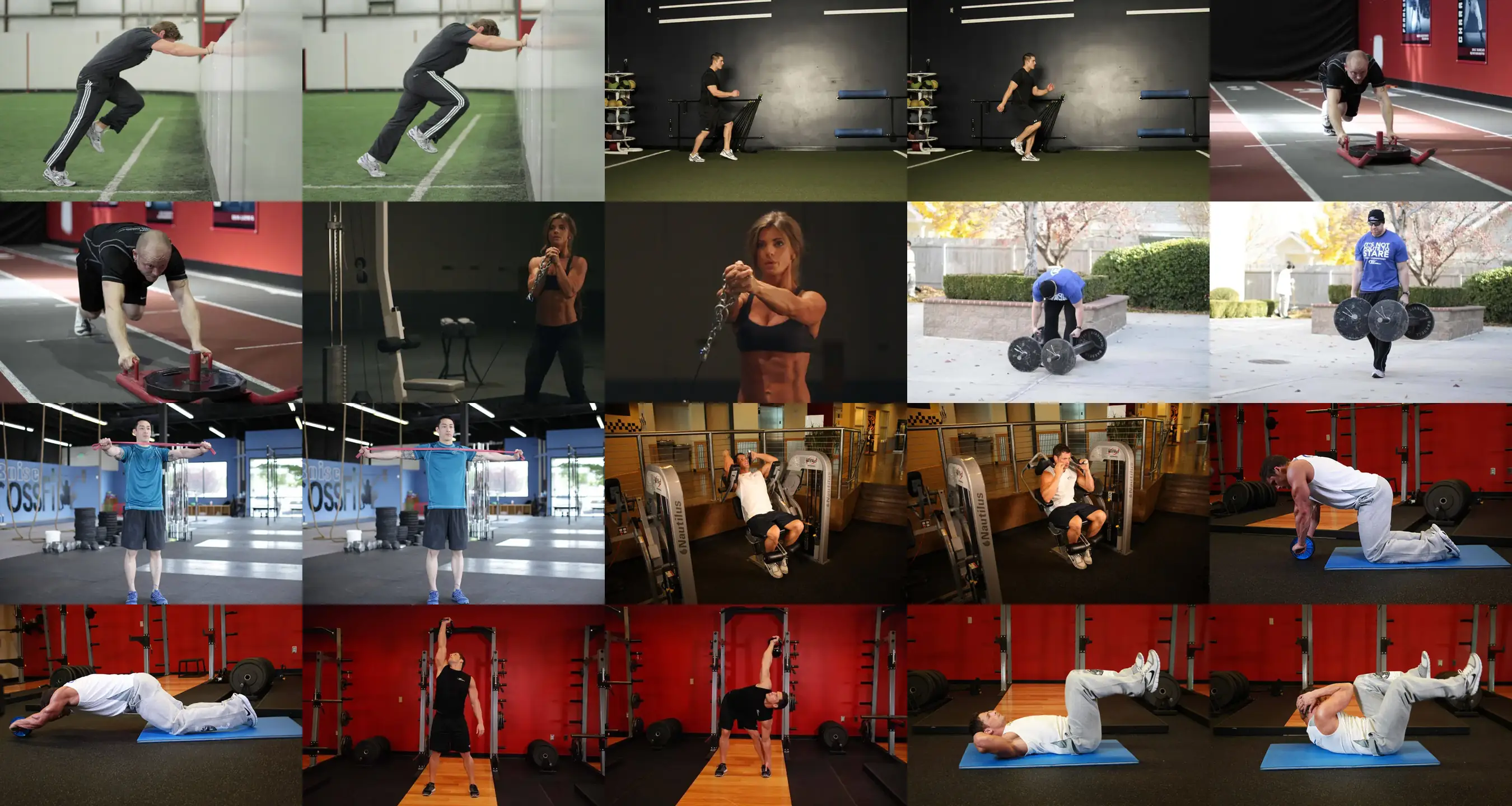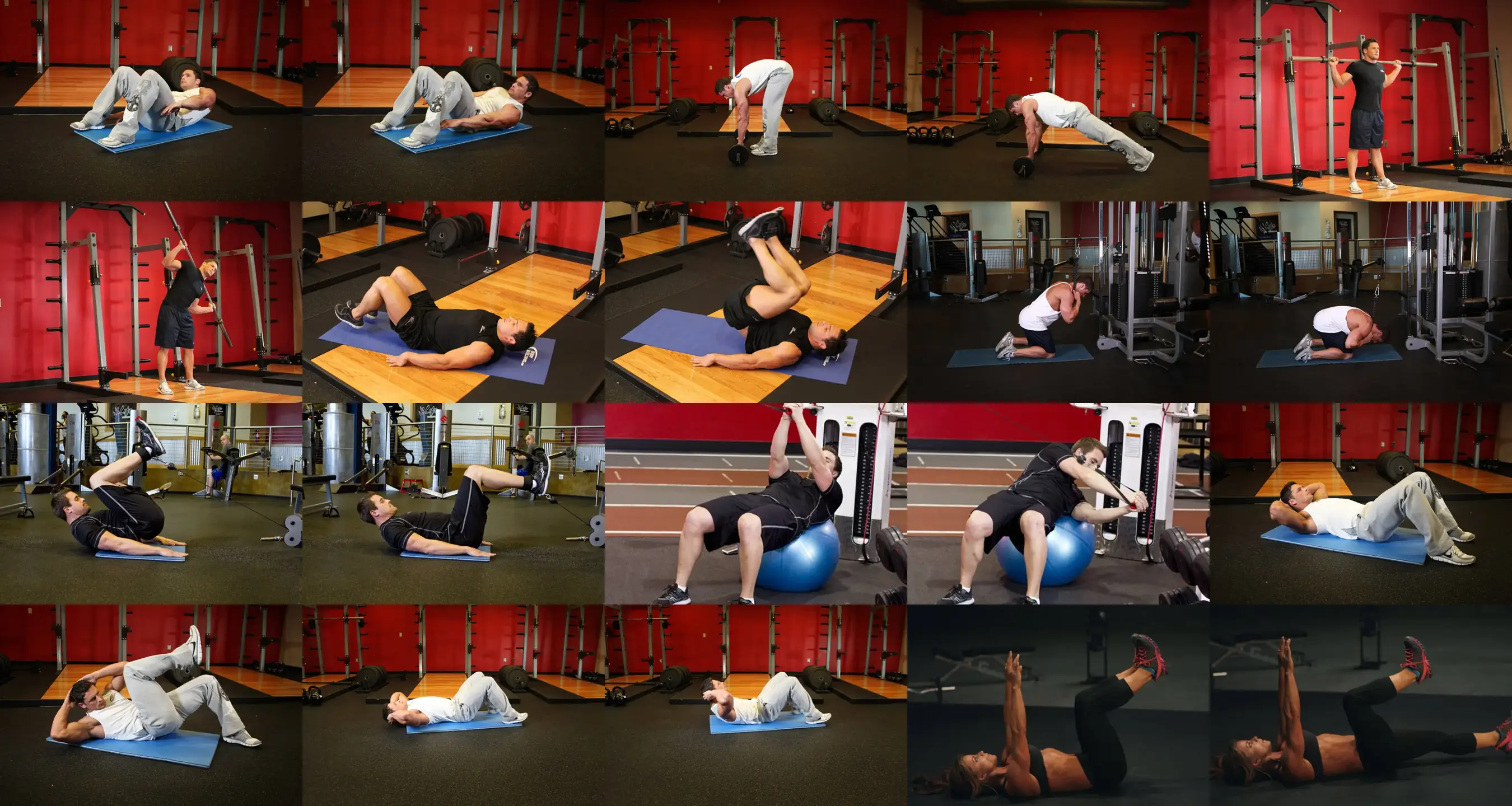
Setup and loading
Lie on a mat with arms by your sides and palms down for support. The exercise gets harder as you straighten your legs and slow the lowering phase; start with knees bent at 90 degrees.
How to do the bent-knee hip raise step by step
- Lie on your back with arms by your sides, palms down and legs lifted with knees bent to 90 degrees.
- Press your lower back into the floor and breathe in without losing that position.
- Exhale and curl your pelvis toward your chest, lifting your glutes a few inches off the floor.
- Bring your knees toward your face without swinging, keeping the knee angle constant.
- Squeeze your abs for a second at the top.
- Lower your pelvis slowly one vertebra at a time as you breathe in, until your tailbone touches down.
Form cues
- Move your pelvis, not just your legs
- Knees locked at 90 degrees
- Exhale on the way up
- Lower one vertebra at a time
Common mistakes
- Swinging your legs for momentum: takes the abs out; start each rep from a dead stop.
- Pushing hard with your hands: cheats with your arms; use them only for balance.
- Dropping your hips: wastes the eccentric phase; take two or three seconds to lower.
- Arching your lower back between reps: stresses your spine; keep it pressed down.
How to make it easier or harder
If you cannot lift your pelvis yet, start with floor pelvic tilts with feet planted. To progress, straighten your legs more, perform it on a decline bench or move on to captain's chair knee raises.
Sets and reps for your goal
Hypertrophy
3-4 x 8-12 · rest 60-90 s3-4 sets of 6-12 reps (up to 15-20 on isolation exercises) at 65-80% of your max. Rest 1 to 2 minutes.
Get close to failure (0-3 reps in reserve) and control the lowering for 2-3 seconds. Accumulate 10-20 sets per muscle per week.
Max Strength
4-5 x 3-6 · rest 2-3 min3-6 sets of 1-6 reps at 80-90% of your max (1RM). Rest 2 to 5 minutes.
Leave 1-3 reps in reserve. If your technique breaks down, lower the weight: strength is built with good reps.
A guide for healthy adults. Adjust the load to your level and see a professional if you have an injury.
Check your form
Film yourself from the side or ask someone to watch, then tick what you get right.
Frequently asked questions
Do hip raises work the lower abs?
The rectus abdominis is one muscle, but this exercise emphasizes the lower part because the movement starts at the pelvis. It is great for learning to control posterior pelvic tilt.
How is a hip raise different from a leg raise?
In a leg raise most of the movement happens at the hip, so the hip flexors work hard. Here the goal is lifting your pelvis off the floor, so your abs do more of the work.
Sports it suits
Gear for this exercise
- Exercise matThick (8-10 mm) for floor work.
As an Amazon Associate, Muscle Atlas earns from qualifying purchases.