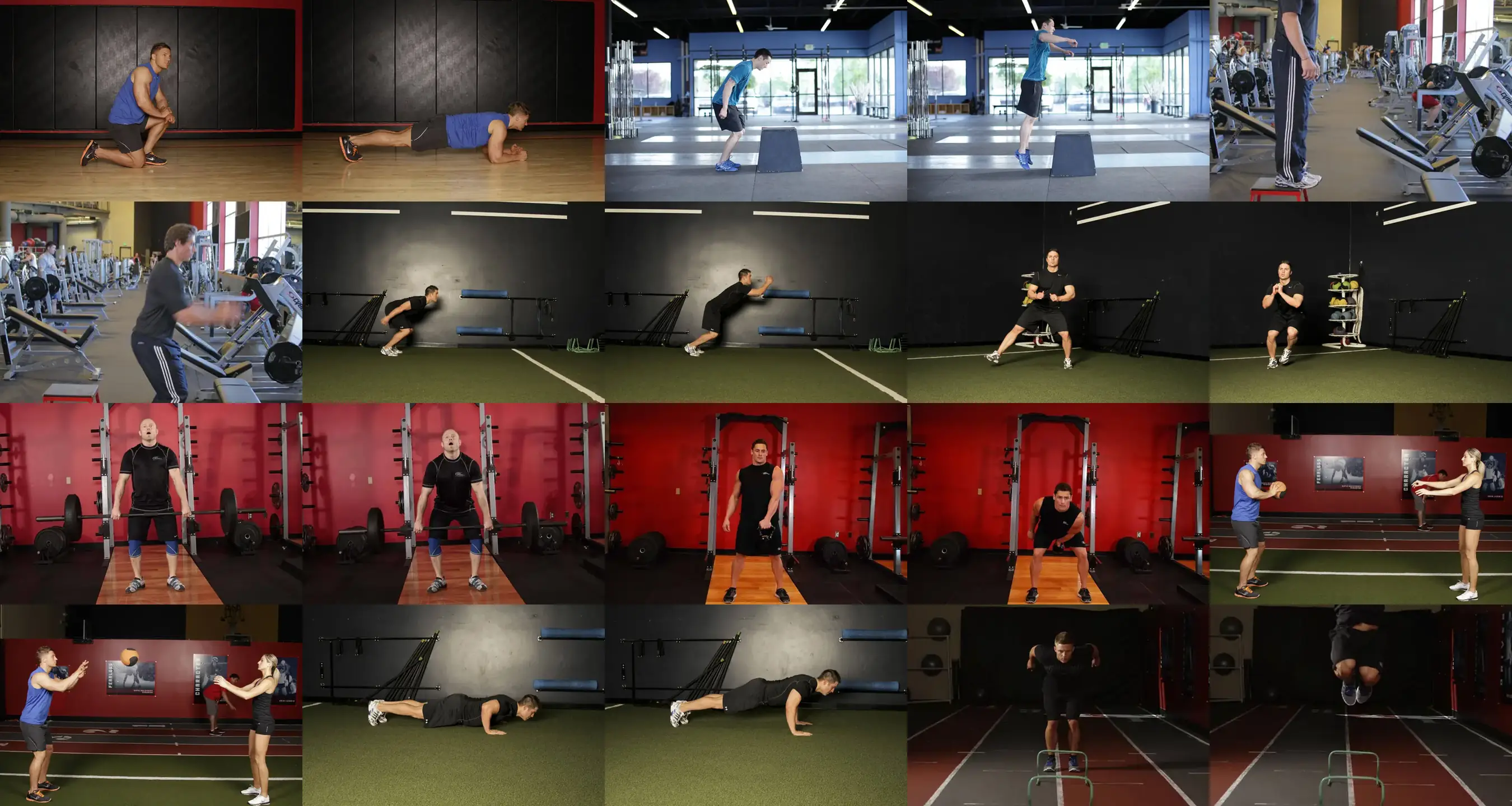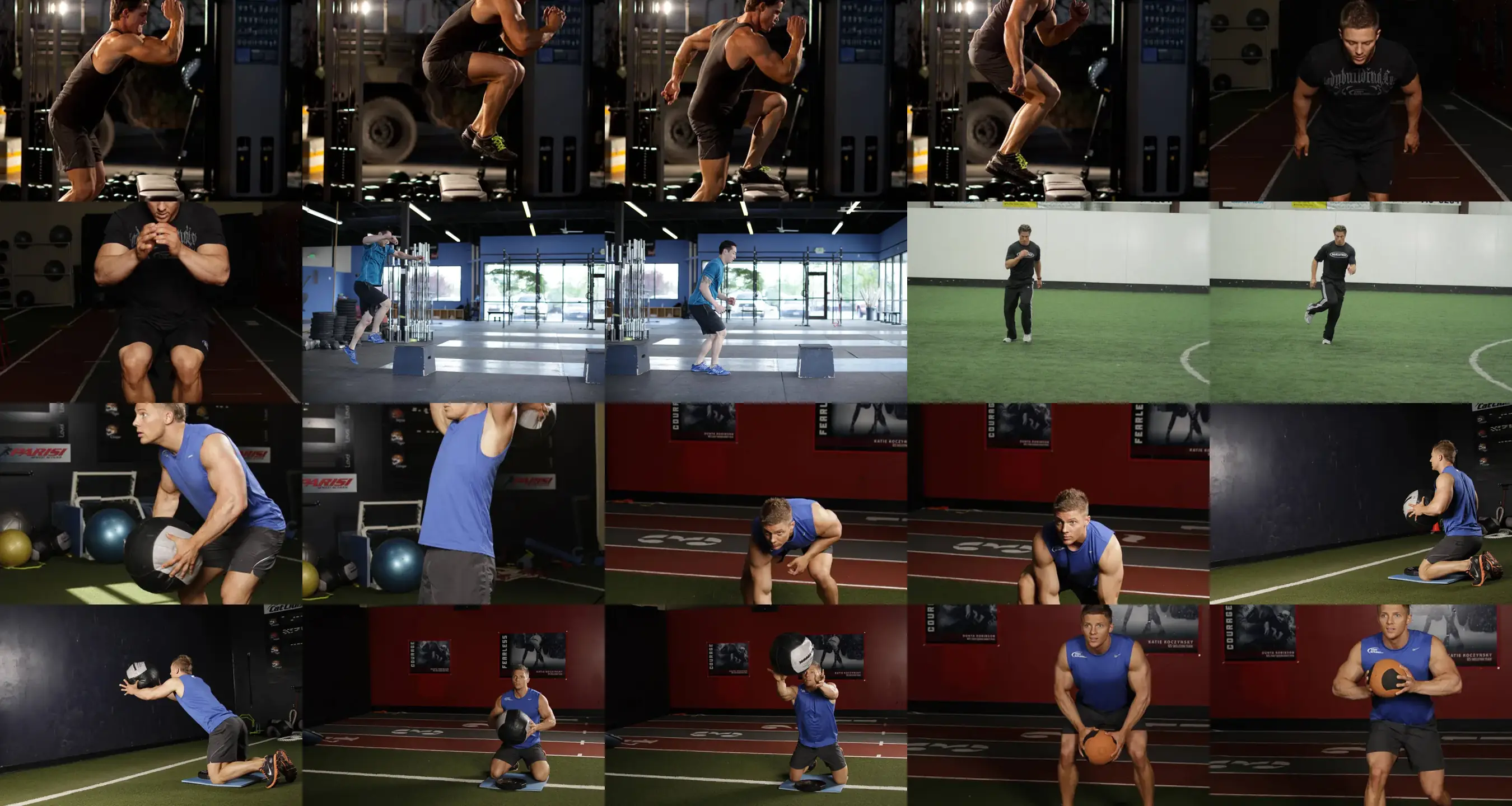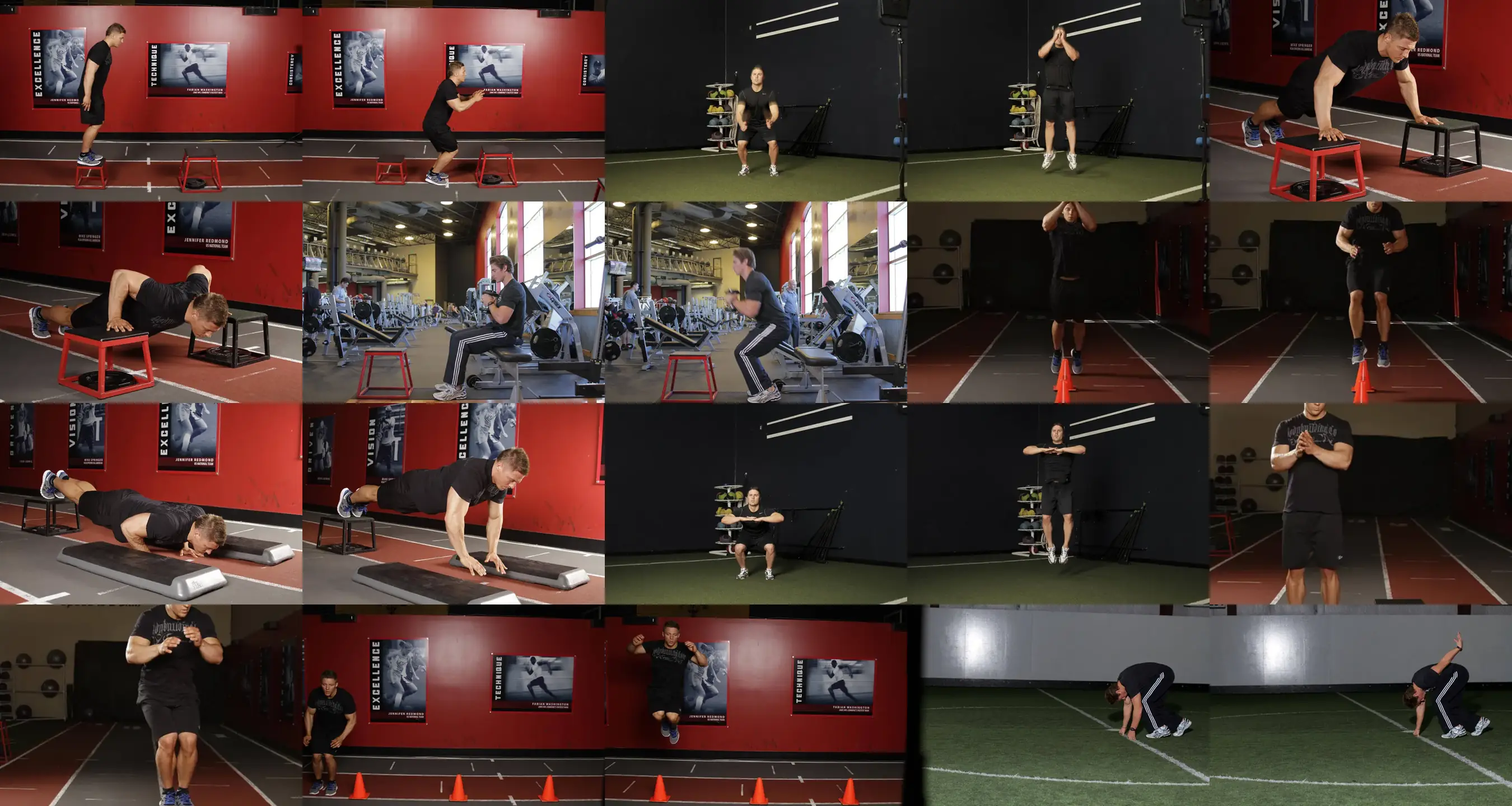
Setup and loading
Set 3 to 5 low cones, 6 to 12 inches tall, in a row about 2 to 3 feet apart on a non-slip surface. Start with low cones and few hops per set; raise the height only when contacts stay short and quiet.
How to do the lateral cone hops step by step
- Line up the cones and stand sideways next to the first one with feet hip-width apart.
- Bend your knees and hips slightly, weight on the balls of your feet and arms ready.
- Jump sideways over the first cone, pushing off both legs and using your arms for momentum.
- Land softly on the balls of your feet with knees bent and aligned over your toes.
- Rebound immediately toward the next cone, keeping ground contact as short as possible.
- After the last cone, recover and repeat in the opposite direction, breathing rhythmically between hops.
Form cues
- Quick contacts, like the floor is hot
- Land soft and quiet
- Knees track over your feet
- Stable torso, no leaning to one side
Common mistakes
- Landing stiff-legged: impact goes up; bend your knees and hips as you touch down.
- Knees caving on landing: it loads the ligaments; keep them in line with your feet.
- Cones too tall: they slow your contacts; choose a height that keeps hops quick.
- Pausing between hops: you lose the reactive effect; link hops with a steady rhythm.
How to make it easier or harder
To make it easier, hop sideways over a line on the floor or add a small bounce between cones. To progress, use taller cones or mini hurdles, hop on one leg, or finish the last hop with a lateral sprint.
Sets and reps for your goal
Speed
4-6 x 10-30 m or 5-10 s · full rest4-8 reps of 10-40 meters (or 3-6 seconds). Full rest: 1 minute for every 10 meters.
Always at 95-100%. If your time gets more than 3-5% slower or your technique falls apart, stop: running tired trains endurance, not speed.
Plyometrics
3-5 x 3-6 jumps · rest 1-2 min3-6 sets of 3-8 jumps. In total, 60-100 contacts per session (40-60 if you're a beginner). Rest 1 to 2 minutes between sets.
Short, quiet ground contact. If the jump loses height or your foot sticks to the ground, stop: the set is no longer training reactivity. Two sessions per week, 48 h apart.
A guide for healthy adults. Adjust the load to your level and see a professional if you have an injury.
Check your form
Film yourself from the side or ask someone to watch, then tick what you get right.
Frequently asked questions
How many lateral cone hops should I do?
As a beginner, 3 to 5 sets of 4 to 6 hops with 60 to 90 seconds of full rest is plenty. Quality matters most in plyometrics, so stop the set when your contacts get slow or loud.
What sports benefit from lateral cone hops?
They are great for soccer, basketball, tennis, pickleball, and skiing, where you change direction constantly. They improve foot speed and your ability to brake and push off sideways with control.
Sports it suits
Gear for this exercise
- Plyo boxFoam boxes forgive missed jumps.
As an Amazon Associate, Muscle Atlas earns from qualifying purchases.