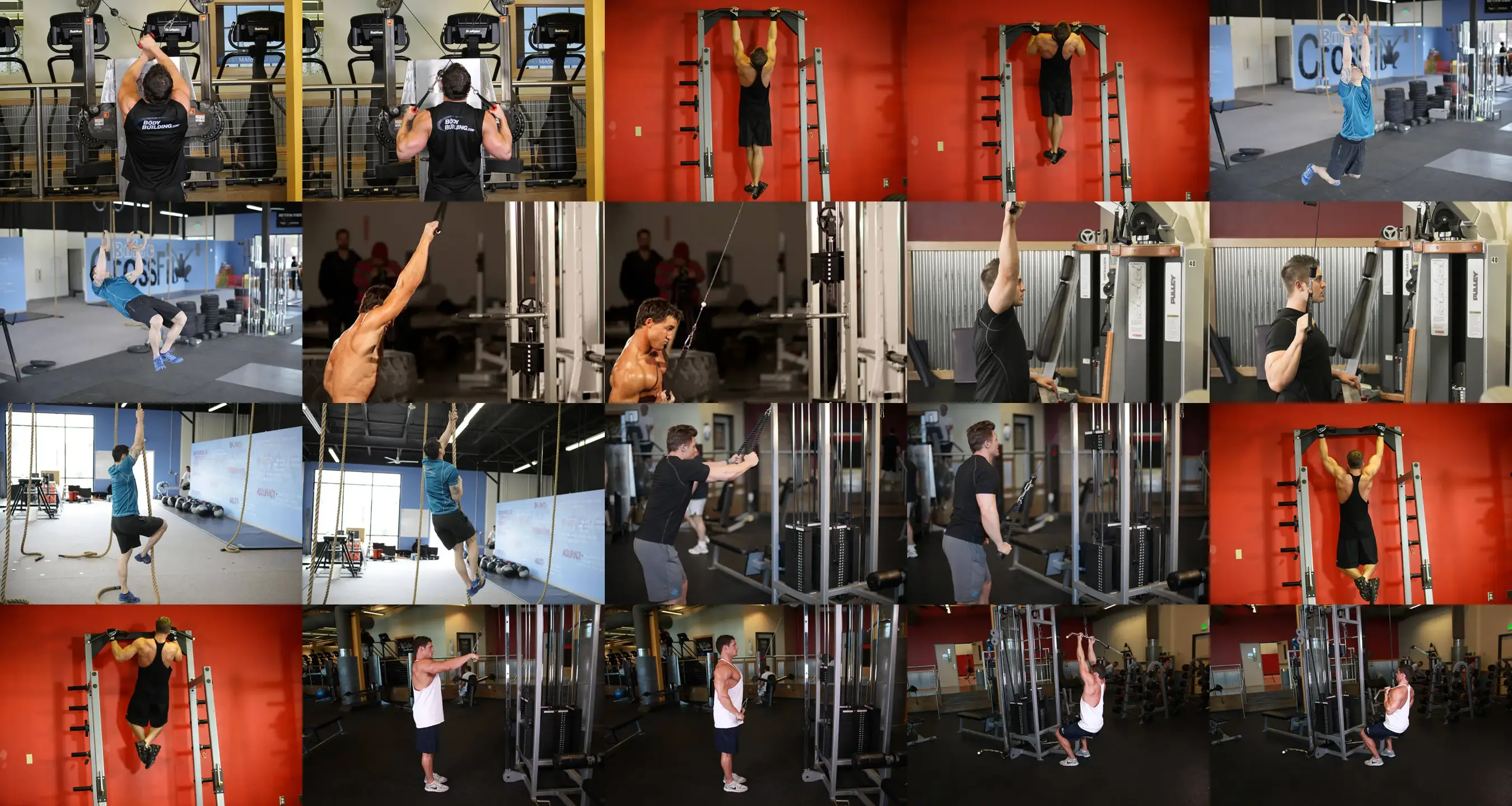
Setup and loading
You need a thick rope hung from a secure anchor with a mat underneath. Scale difficulty by height: start with two or three pulls and climb higher as your descent stays controlled.
How to do the rope climb step by step
- Grab the rope with both hands overhead, one above the other, and hop up to hang.
- Lift your knees and wrap the rope around the outside of one leg, letting it cross over the top of the opposite foot.
- Step down on the rope with your other foot to pinch it, so you can stand on the rope.
- Straighten your legs to lift your body and move your hands up one at a time, keeping the rope close to your chest.
- Bring your knees up again, re-lock your feet, and repeat until you reach the target height, breathing at each lock.
- Climb down hand under hand while easing the foot lock, never sliding, to protect your palms.
Form cues
- Legs push, arms mostly just hold on
- Lock your feet before you move a hand
- Keep the rope close to your chest
- Climb down hand under hand, never slide
Common mistakes
- Climbing with only your arms: you burn out in a few feet; learn the foot lock first.
- Sliding down the rope: it causes rope burns; lower yourself hand under hand under control.
- Using a loose foot lock: your feet slip and arms overload; stomp the rope firmly onto your foot.
- Letting your hands drift away from you: it adds leverage against you; keep the rope near your chest.
How to make it easier or harder
To regress, practice the foot lock while seated or hanging just off the floor, and build grip with towel pull-ups. To progress, climb legless in an L-sit or do back-to-back ascents with shorter rest.
Sets and reps for your goal
Hypertrophy
3-4 x 8-12 · rest 60-90 s3-4 sets of 6-12 reps (up to 15-20 on isolation exercises) at 65-80% of your max. Rest 1 to 2 minutes.
Get close to failure (0-3 reps in reserve) and control the lowering for 2-3 seconds. Accumulate 10-20 sets per muscle per week.
Max Strength
4-5 x 3-6 · rest 2-3 min3-6 sets of 1-6 reps at 80-90% of your max (1RM). Rest 2 to 5 minutes.
Leave 1-3 reps in reserve. If your technique breaks down, lower the weight: strength is built with good reps.
Endurance
2-4 x 15-25 or 30-60 s2-4 sets of 15-30 reps or 30-60 seconds at 40-60% of your max. Rest 30 to 60 seconds.
Steady pace and clean technique to the end. Circuits help you build volume with little rest.
A guide for healthy adults. Adjust the load to your level and see a professional if you have an injury.
Check your form
Film yourself from the side or ask someone to watch, then tick what you get right.
Frequently asked questions
How do I learn the rope climb foot lock?
Practice seated on the floor by running the rope outside one leg and over that foot, then stepping on it with the other. Next, hang just off the floor and try standing up on the lock.
What muscles does the rope climb work?
It mainly works your lats, biceps, and forearms, with heavy grip demand. Your shoulders and core stabilize, and your legs help when you use a foot lock. Legless climbs make it almost purely upper body.
Sports it suits
Gear for this exercise
- Pull-up barWall-mounted beats doorway if you plan to add weight.
As an Amazon Associate, Muscle Atlas earns from qualifying purchases.