Setup and loading
Start by hopping over a line and move to a low 4 to 8 inch cone once you control the landing. Difficulty rises with obstacle height, speed and linking reps without a pause.
How to do the single-leg lateral hop step by step
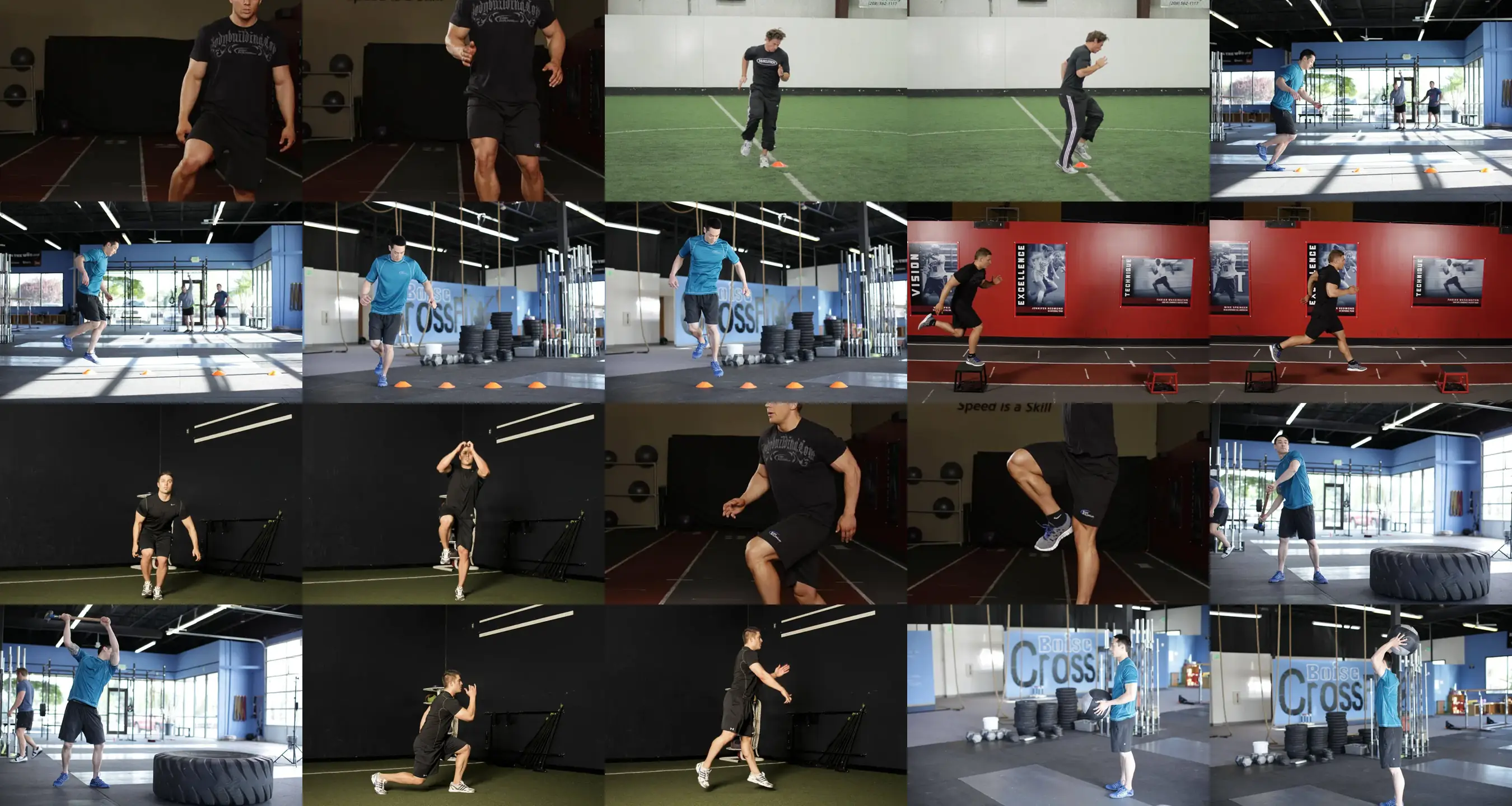
- Stand on one leg beside the cone with the knee slightly bent and the other leg tucked up.
- Keep your torso upright, pelvis level and arms ready for balance, breathing in.
- Hop sideways over the cone, pushing from the ankle and hip of the standing leg.
- Land on the same leg on the ball of the foot, knee aligned over the foot, exhaling.
- Stabilize for one or two seconds or, once you own it, rebound back to the starting side.
- Complete 6 to 10 hops and switch legs.
Form cues
- Knee over your foot on landing
- Level pelvis
- Soft forefoot landing
- Torso still and upright
Common mistakes
- Knee caving in: it stresses ligaments; squeeze your glute and align the knee.
- Landing on a stiff leg: impact goes into the joint; absorb by bending.
- Leaning your torso to balance: you lose control; lower the height or speed.
- Linking hops before you control the landing: it raises risk; stick each landing first.
How to make it easier or harder
As a regression, do two foot lateral hops or single leg balance with small hops in place. To progress, raise the cone, link hops without pausing, or add diagonal hops.
Sets and reps for your goal
Plyometrics
3-5 x 3-6 jumps · rest 1-2 min3-6 sets of 3-8 jumps. In total, 60-100 contacts per session (40-60 if you're a beginner). Rest 1 to 2 minutes between sets.
Short, quiet ground contact. If the jump loses height or your foot sticks to the ground, stop: the set is no longer training reactivity. Two sessions per week, 48 h apart.
A guide for healthy adults. Adjust the load to your level and see a professional if you have an injury.
Check your form
Film yourself from the side or ask someone to watch, then tick what you get right.
Frequently asked questions
Do single leg lateral hops prevent knee and ankle injuries?
They are part of many prevention programs because they train knee and ankle control on lateral landings. They cannot guarantee you avoid injury, but they improve stability and confidence in those movements.
How many single leg lateral hops should you do?
Two to four sets of 6 to 10 hops per leg is usually enough. Landing quality matters more than the number of reps.
Sports it suits
Gear for this exercise
- Plyo boxFoam boxes forgive missed jumps.
As an Amazon Associate, Muscle Atlas earns from qualifying purchases.