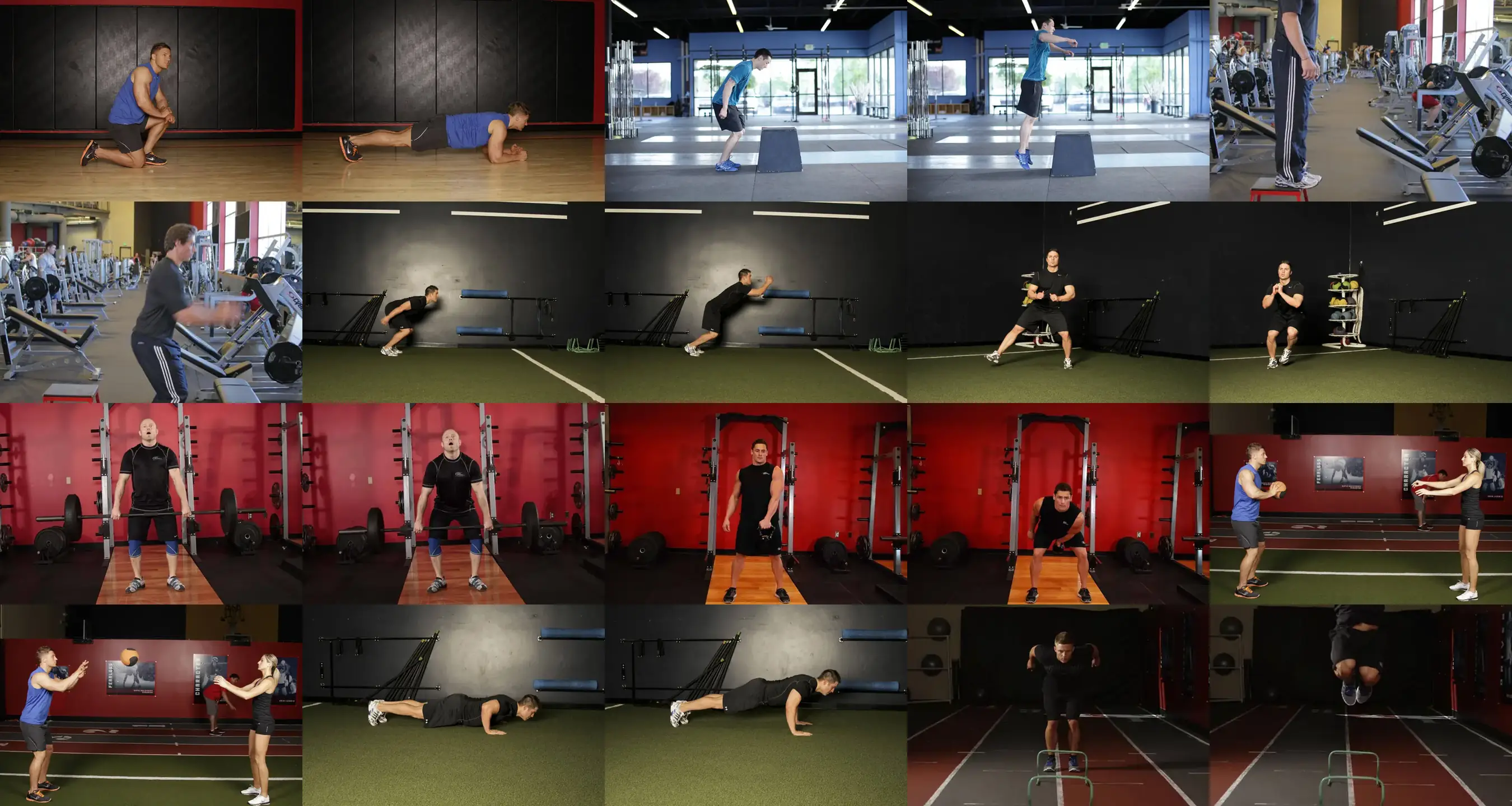
Setup and loading
Use a stable box or step 6 to 12 inches high. A taller box means more range and more demand; start low and go higher only if you land on the box with control every rep.
How to do the single-leg stride jump step by step
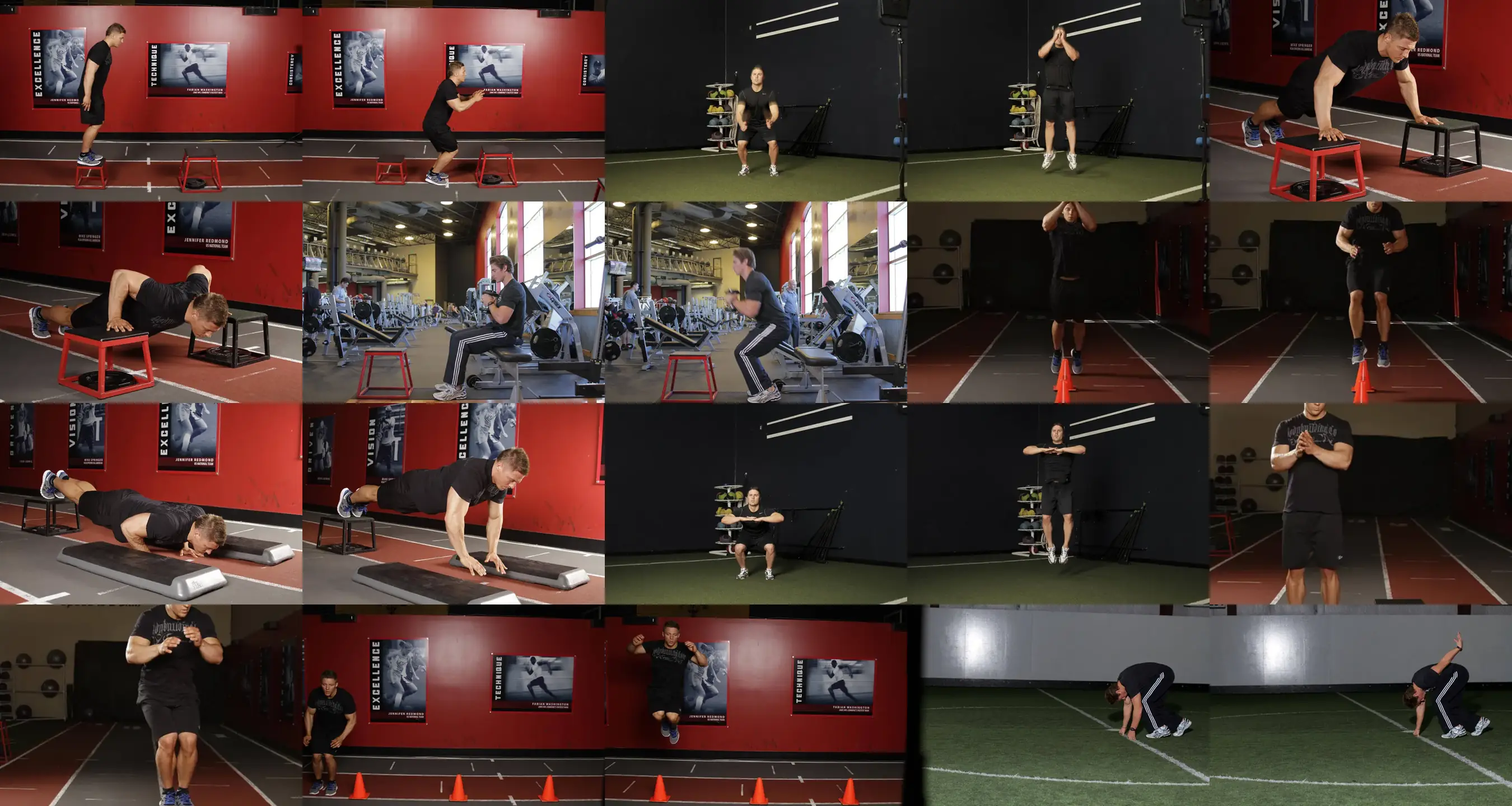
- Stand sideways to the box with the inside foot fully on top and the outside foot on the floor.
- Lean your torso slightly forward, set your arms in a running position and breathe in.
- Drive hard with the top leg, extending hip, knee and ankle, and lift the outside knee high.
- Swing the arm opposite the rising knee to gain height, exhaling on takeoff.
- Land with the same foot on the box, absorbing with a bent knee, as the other foot returns to the floor.
- Link 6 to 10 reps, then switch sides.
Form cues
- Drive with the top leg
- Free knee high
- Whole foot back on the box
- Opposite arm and knee in sync
Common mistakes
- Pushing off the floor leg: it steals work from the top leg; drive only from the box foot.
- Landing with your toes on the edge: your foot can slip; land with the whole sole.
- Knee caving on contact: it stresses the joint; align knee and foot.
- Rushing the rhythm: quality drops; prioritize height and control over speed.
How to make it easier or harder
As a regression, do step ups with a knee drive and no jump. To progress, raise the box, link reps faster, or move to the stride jump crossover.
Sets and reps for your goal
Plyometrics
3-5 x 3-6 jumps · rest 1-2 min3-6 sets of 3-8 jumps. In total, 60-100 contacts per session (40-60 if you're a beginner). Rest 1 to 2 minutes between sets.
Short, quiet ground contact. If the jump loses height or your foot sticks to the ground, stop: the set is no longer training reactivity. Two sessions per week, 48 h apart.
A guide for healthy adults. Adjust the load to your level and see a professional if you have an injury.
Check your form
Film yourself from the side or ask someone to watch, then tick what you get right.
Frequently asked questions
How is this different from the stride jump crossover?
In this drill you land back on the box with the same foot, so you always train the same leg. In the crossover you travel to the other side and land on the other foot, alternating legs each rep.
Do single leg stride jumps help your running?
Yes, they train vertical power in each leg and knee drive, two important parts of the stride. That is why they are common in sprinter and runner programs.
Sports it suits
Gear for this exercise
- Plyo boxFoam boxes forgive missed jumps.
As an Amazon Associate, Muscle Atlas earns from qualifying purchases.