Setup and loading
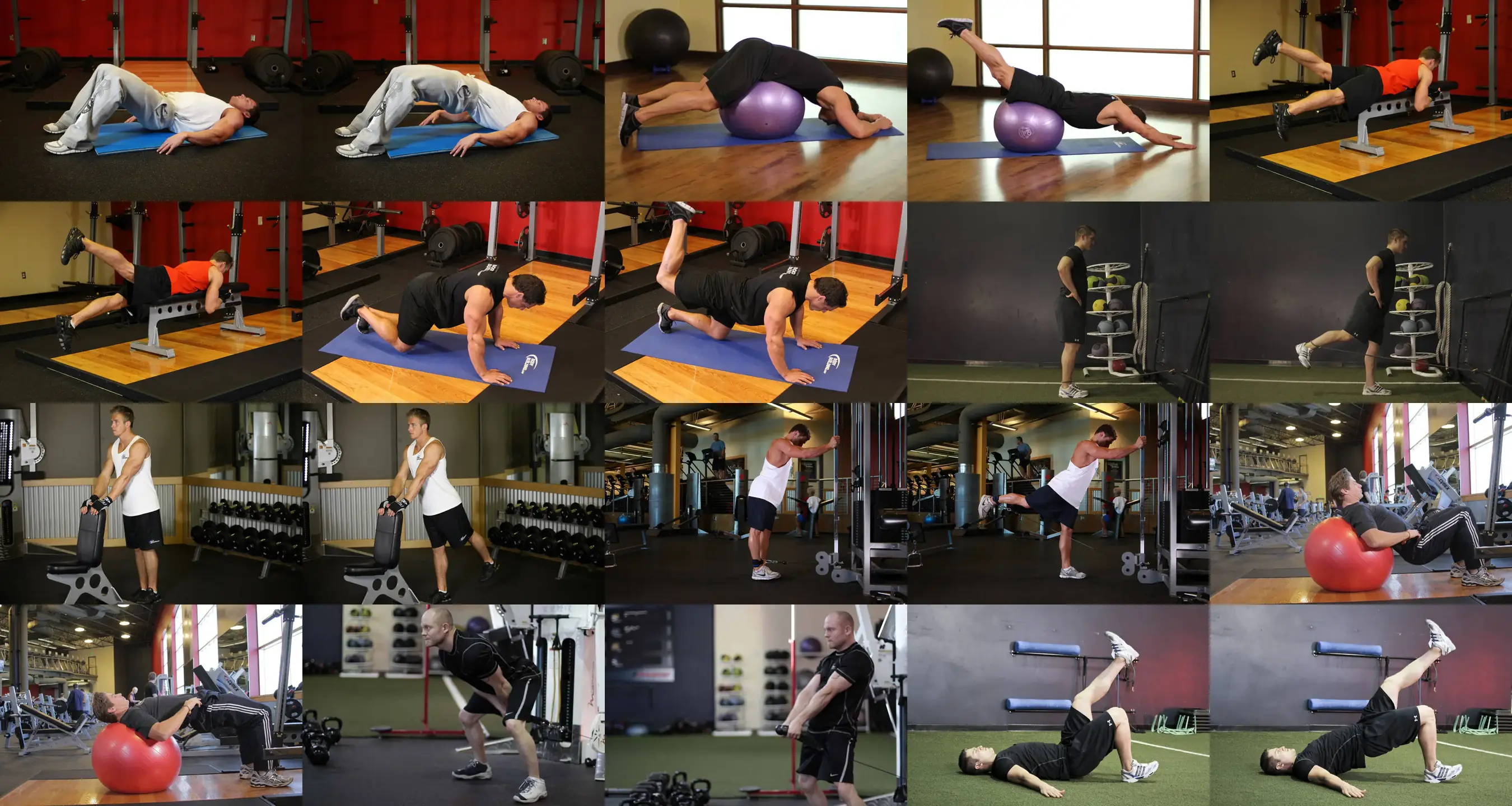
Sit in front of the ball, lean back until your shoulder blades rest on it, and set your feet hip width apart so your knees reach 90 degrees at the top. Start with bodyweight and add a dumbbell across your hips once you can control the ball for 12 to 15 reps.
How to do the stability ball hip thrust step by step
- Rest your upper back on the ball with feet planted and, if using weight, a dumbbell held across your hips.
- Set your feet hip width apart, knees tracking over toes, and chin slightly tucked.
- Inhale and lower your hips toward the floor, keeping your feet planted and the ball still under your back.
- Exhale and drive through your heels, squeezing your glutes until your torso is parallel to the floor.
- Hold one second at the top with ribs down and knees at 90 degrees, without arching.
- Lower under control and repeat 10 to 15 times without the ball rolling.
Form cues
- Drive through your heels
- Knees at 90 degrees at the top
- Ribs down, chin tucked
- Ball stays put under your shoulder blades
Common mistakes
- Arching your lower back at the top: loads the spine; squeeze glutes and tuck the pelvis slightly.
- Feet too far out: shifts work to hamstrings; bring them in until knees hit 90 degrees.
- Letting the ball roll: costs stability; keep your weight centered and feet firm.
- Knees caving on the way up: misaligns the hips; push them out over your feet.
How to make it easier or harder
To regress, do a floor glute bridge or the ball version with no weight. To progress, use a heavier dumbbell, add a band above your knees, hold 3 seconds at the top, or move to single-leg or barbell bench hip thrusts.
Sets and reps for your goal
Hypertrophy
3 x 12 · rest 60 s3-4 sets of 6-12 reps (up to 15-20 on isolation exercises) at 65-80% of your max. Rest 1 to 2 minutes.
Get close to failure (0-3 reps in reserve) and control the lowering for 2-3 seconds. Accumulate 10-20 sets per muscle per week.
Injury Prevention
3 x 10 slow2-3 sets of 10-15 slow reps with a light or moderate load, 2-3 times per week.
Control the lowering (about 3 seconds). This is quality work, not fatigue work: finish every set feeling good.
A guide for healthy adults. Adjust the load to your level and see a professional if you have an injury.
Check your form
Film yourself from the side or ask someone to watch, then tick what you get right.
Frequently asked questions
Is a stability ball hip thrust as good as a bench hip thrust?
It activates the glutes similarly and adds stability work, but the ball limits how much load you can safely use. It is a great home option; for heavy progression, a bench and barbell are a better fit.
Where should my back rest on the stability ball?
Rest the area around your shoulder blades on the ball, not your neck or lower back. That way the ball acts as a pivot and your hips can rise until your torso is parallel to the floor. Keep your head supported or chin tucked.
Sports it suits
Gear for this exercise
- Stability ballPick the diameter for your height (55-65 cm for most people).
- Adjustable dumbbellsSave space and replace a whole dumbbell rack at home.
As an Amazon Associate, Muscle Atlas earns from qualifying purchases.